how the Closure of Spirit Airlines Transforms the U.S. Aviation Sector
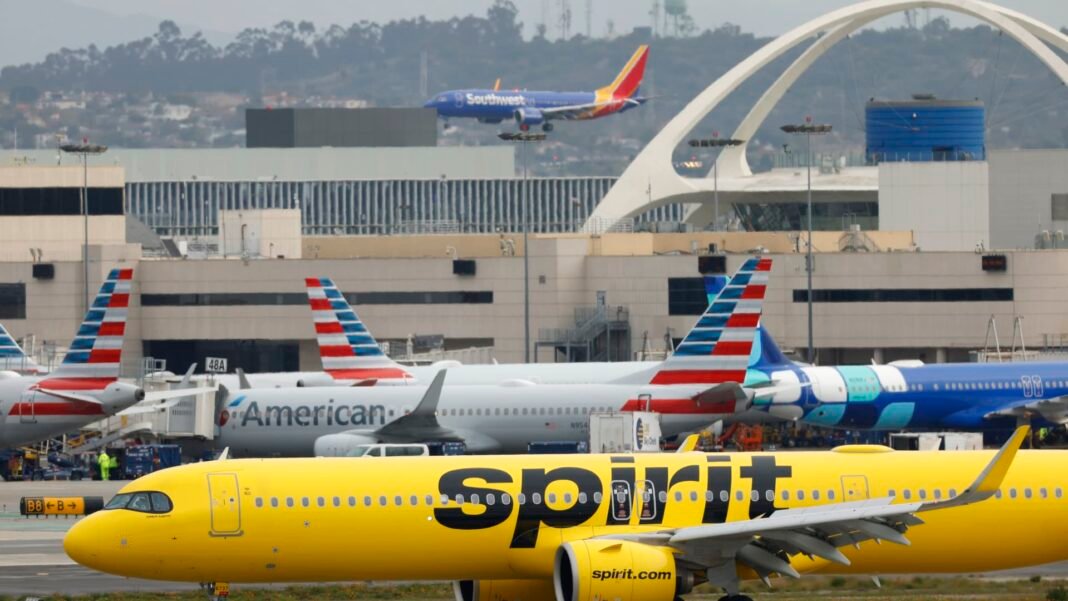
The sudden halt of Spirit Airlines’ operations has left thousands of travelers stranded and sparked an immediate reaction from competing airlines eager to fill the void.This unexpected shutdown has forced carriers to swiftly revise their flight schedules and broaden their route networks, aiming to attract former Spirit customers and secure valuable airport slots.
Rapid industry Adjustments: Capitalizing on New Market Gaps
Even before Spirit officially ceased flying, rival airlines had been preparing for its exit by planning route expansions months in advance. Several new routes have already launched this week as competitors race to occupy the spaces left behind by Spirit’s departure.
This competition over airport gates and loyal passengers is expected to intensify rivalry among remaining airlines but may also contribute to rising ticket prices. Experts caution that with fewer budget-friendly options available, airfares could climb beyond recent increases caused by surging fuel expenses.
Impact on Pricing and Flight Availability
Even though Spirit represented about 1.5% of domestic U.S. flight capacity during its scaled-back summer schedule, its disappearance is anticipated to affect industry-wide pricing significantly.Analysts highlight that removing many point-to-point flights once offered by Spirit will likely increase revenue per available seat mile for most carriers in the short term.
Major Airlines Expand Routes following Shutdown
- Breeze Airways: Initiating service between Atlantic City, New Jersey, and Charleston, South Carolina; also providing year-round flights connecting Atlantic City with Raleigh-Durham International Airport (North Carolina) and Tampa (Florida).
- JetBlue Airways: Significantly growing operations at Fort Lauderdale-Hollywood International Airport-previously a key hub where it ranked just behind Spirit-with new nonstop flights added to destinations such as Barranquilla and Cali in Colombia; Baltimore; Charlotte; Indianapolis; Chicago; Detroit; Houston; Nashville; Ponce (Puerto Rico); Austin; Dallas/Fort Worth International Airport; Raleigh-Durham (NC); Santo Domingo and Santiago de los Caballeros in the Dominican Republic.
“We are dedicated to sustaining strong air service at Fort Lauderdale,” stated JetBlue President Marty St.George while announcing these expansions.
A Historical Viewpoint: Past Responses Amid financial Challenges
This scenario echoes last summer’s developments when Spirit filed for bankruptcy protection for a second time within twelve months. At that juncture, othre airlines began boosting services at airports where Spirit held critically important presence as it sought cost-cutting strategies aimed at emerging from bankruptcy by mid-2026.
The airline’s recovery efforts ultimately collapsed after negotiations over a potential $500 million loan fell through late last week-a setback accelerating its downfall following years of mounting internal difficulties combined with external pressures.
The Struggles Facing Ultra-Low-Cost Carriers Today
The shutdown underscores vulnerabilities inherent among ultra-low-cost carriers amid fluctuating fuel prices intensified by geopolitical tensions such as recent conflicts affecting global oil markets in early 2024. Unlike larger legacy airlines benefiting from diversified income streams-including corporate contracts-these budget operators lack sufficient financial cushions against such shocks.
Immediate Industry Measures Post-Shutdown Proclamation
- United Airlines: Booked roughly 14,000 displaced former Spirit passengers on Saturday alone while implementing capped fares for affected travelers;
- Southwest Airlines: Assisted more than 20,000 stranded customers;
- Additionally:
- American Airlines;
- Breeze Airways;
- Frontier Airlines;
- Southeast-focused JetBlue Airways;
These carriers collectively introduced fare caps or special accommodations immediately following the announcement of the shutdown.
“Choosing us during this transition means access to extensive connectivity across continents supported by dependable service from one of aviation’s most experienced teams,” said United’s chief customer officer David Kinzelman early Saturday morning.
The Future Outlook: Watching Frontier Amidst Market Changes
The industry now closely monitors fellow low-cost competitor Frontier Airlines-which previously explored merging with Spirit-as it prepares upcoming quarterly results under increased scrutiny regarding its ability to withstand challenges facing budget operators today.

“The elimination of surplus capacity formerly provided by ultra-low-cost carriers like Spirit presents both opportunities and concerns about future affordability,” noted aviation market analysts following these recent shifts.”