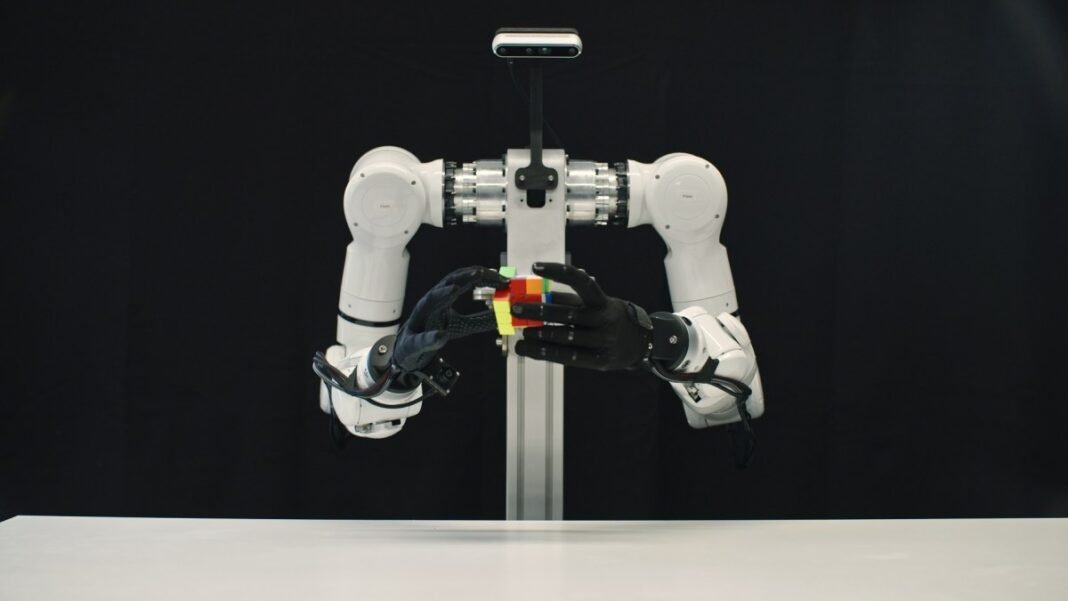
Introducing GENE-26.5: A Breakthrough in Robotic Hand Dexterity by Genesis AI
Advancing Robotics with human-Scale Manipulation
Genesis AI, a trailblazing startup that raised $105 million in seed capital to pioneer foundational artificial intelligence for robotics, has launched its first robotic hand model named GENE-26.5. Unlike many competitors who rely on basic two-finger grippers, Genesis has engineered robotic hands that closely replicate the size and anatomy of human hands, drastically reducing the disparity between robotic manipulation and everyday human tasks.
This design innovation allows for the acquisition of richer and more nuanced datasets than previously possible, enabling their AI systems to learn a wider array of complex manual skills.
A Holistic Progress Strategy: Merging Hardware with Software Intelligence
The leadership at Genesis recognized early that cutting-edge AI algorithms alone would not suffice without equally precise hardware control mechanisms. This realization led them to pursue an integrated full-stack approach-developing both proprietary software models and custom-built robotic hardware internally-to ensure seamless optimization across all system components.
Sensor-Embedded Gloves: Capturing Human Motion for Smarter Robots
To complement their advanced robotic hands, Genesis designed sensor-rich gloves that serve as physical counterparts to the robot’s manipulators. These gloves record detailed motion data during routine activities while maintaining user comfort and dexterity comparable to standard industrial safety gloves enhanced with sophisticated sensors.
This method tackles what experts refer to as the “embodiment gap”-the difficulty robots face when learning from humans due to differences in physical form-by closely mimicking human hand structure and movement patterns, facilitating smoother data transfer into training algorithms.
Diverse Skill Demonstrations Illustrate Robust Capabilities
The versatility of GENE-26.5 is demonstrated through various complex tasks such as cracking eggs without shell fragments falling in, slicing ripe avocados precisely, blending smoothies smoothly, performing intricate piano melodies, and even solving Rubik’s cubes-a classic benchmark for dexterity in robotics research worldwide.
“Preparing meals remains my favorite showcase,” remarked a company executive. “It demands flawless execution of multiple sequential steps-a perfect testbed for evaluating our system’s proficiency.”
Practical Uses Beyond Laboratory Showcases
Beyond impressive demonstrations lies tangible commercial potential; Genesis envisions applications like laboratory automation where delicate handling is paramount. Their realistic hardware combined with advanced simulation environments accelerates training cycles by allowing rapid virtual testing before deploying robots into real-world scenarios.
Innovative Data Collection Methods Driving Continuous Learning
- User-Worn Sensor Devices: Lightweight sensor gloves are worn unobtrusively by professionals such as pharmaceutical technicians or assembly line workers during daily routines to capture authentic task data seamlessly.
- First-Person video Integration: Egocentric video recordings supplement sensor inputs by providing visual context around actions performed throughout workflows.
- Collaborations With External Partners: To broaden its “human skill library,” Genesis plans partnerships with organizations capable of gathering diverse datasets under ethical guidelines ensuring informed consent and fair compensation for participants involved in data collection efforts.
- larger public Video Repositories: Their models have been trained on extensive publicly available footage depicting human activities across numerous fields globally-leveraging this vast resource substantially enhances generalization capabilities across varied tasks.
Tackling Ethical Challenges Related To Workforce Impact
The idea of employees wearing devices that help train robots possibly capable of automating their jobs raises important concerns about privacy rights and equitable remuneration for indirect labor contributions via data provision.While these issues remain under active discussion between Genesis’ clients and participating workers during pilot programs, openness will be essential moving forward to build trust among all stakeholders navigating this technological shift responsibly.
An Expanding Global Footprint backed By Strategic Investment
Soon after emerging publicly in mid-2025 backed by leading venture capital firms including Eclipse Ventures and Khosla Ventures alongside prominent individual investors-the company rapidly expanded operations across three continents with offices established in Paris, London, and California. This geographic diversity taps into Europe’s rich engineering talent pool alongside Silicon Valley’s innovation ecosystem.
Currently employing approximately 60 specialists split nearly evenly between Europe (40-45%) and North America (50-55%), Genesis continues aggressive recruitment efforts worldwide aimed at accelerating development milestones further still.
The Future Vision: Beyond Hands Toward fully Autonomous Robots
Zhou Xian, co-founder & CEO at Genesis AI emphasizes that while mastering dexterous hand manipulation represents a major milestone toward versatile robots capable of complex interactions; their ultimate goal extends well beyond just hand mechanics.
Upcoming releases will introduce fully articulated humanoid robots designed for broad general-purpose applications-marking an exciting new phase aligned firmly with their mission “to create the most capable robotic systems.”