Quebec’s 2026-27 Budget: Steering Through Economic Uncertainties before the October vote
Projected Deficits and Fiscal Strategy
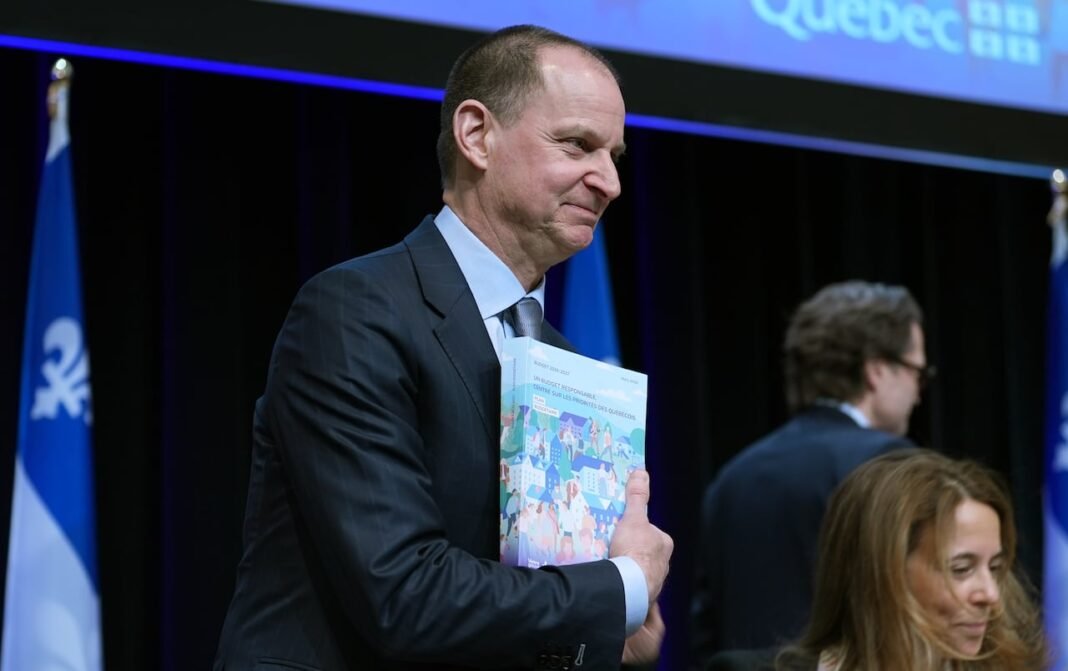
As Quebec prepares for its upcoming october election, Finance minister Eric Girard has unveiled a prudent budget aimed at navigating persistent trade disruptions and geopolitical tensions. the fiscal year 2025-26 is now forecasted to end with a deficit of $9.9 billion,representing roughly 1.5% of Quebec’s GDP-a notable improvement from the earlier estimate of $12.4 billion.
Looking forward to 2026-27, the government plans to further narrow this gap, targeting an $8.6 billion deficit within an overall budget totaling $170.8 billion. Despite external pressures, Girard emphasized that Quebec’s economic fundamentals remain comparatively strong among Canadian provinces.
Key Economic Assumptions and Potential Risks
The financial outlook assumes that U.S. tariffs will hold steady without meaningful escalation-critical for Quebec’s export-heavy economy which depends heavily on cross-border trade with the United States.
The budget also factors in recent surges in oil prices but treats these as short-term spikes expected to ease over time.
A major uncertainty lies in the renewal process of the Canada-United States-Mexico Agreement (CUSMA), which could dramatically affect growth depending on whether trade disputes intensify or are resolved amicably.
Contrasting Economic Scenarios
- If tensions worsen: A mild recession scenario anticipates a slight GDP contraction of 0.2% in 2026 for Quebec, followed by gradual recoveries of 0.8% in 2027 and stronger growth reaching around two percent by 2028.
- If relations stabilize: An optimistic projection expects GDP growth rates near 1.6% for 2026, increasing to two percent in 2027 and maintaining steady expansion close to 1.8% through to 2028.
Sustained Funding Focused on Infrastructure renewal and Social Priorities
The budget-titled “A Responsible Budget with Targeted Measures for Quebecers”-commits over $2 billion more across six years toward infrastructure investments including healthcare facilities, education systems, public transit networks, and road upkeep-all vital sectors underpinning long-term provincial prosperity.
A ample share (71%) is dedicated specifically to maintaining aging infrastructure originally constructed during mid-20th century advancement booms-a challenge common among advanced economies facing costly legacy system maintenance today.
Expanding Healthcare Capacity
An estimated investment of $2.3 billion will support major hospital expansions such as those planned at Sherbrooke’s Hôtel-Dieu Hospital and Québec City’s CHU de Québec-Université Laval facilities alongside new projects like Trois-Rivières Regional Hospital upgrades-aiming to meet rising demands especially within mental health services and general care access improvements amid demographic shifts toward an aging population.
Tackling Urgent Social Challenges Head-On
- The plan allocates funds specifically targeting homelessness reduction efforts across urban centers including Gatineau while enhancing programs addressing domestic violence;
- Additionally prioritizing food security initiatives alongside ongoing support for cultural programming within schools;
- Midsize enterprises throughout various regions receive continued financial assistance designed to boost local economies recovering from pandemic-related disruptions;
Navigating Political Change During Fiscal Planning
This marks Finance Minister Girard’s eighth provincial budget under Coalition Avenir québec (CAQ) governance; though it arrives amid political transitions following Premier François Legault’s resignation announcement earlier this year-and an active CAQ leadership contest between Christine Fréchette and Bernard Drainville set to conclude April 12th when one will assume both party leadership and premiership responsibilities.
Budgetary Provisions Reflect Leadership Transition Considerations
The fiscal framework includes a reserved annual allocation of $250 million over five years explicitly designated for use by CAQ’s incoming leader towards electoral promises-a decision drawing criticism from opposition parties concerned about spending priorities amid tight provincial finances.
“The next leader must prioritize vulnerable communities rather than unchecked expenditures,” cautioned Liberal Leader Charles Milliard urging fiscal restraint given current economic challenges.”
“This document reads more like campaign material than a true reflection of citizen needs,” criticized Québec Solidaire co-spokesperson Ruba ghazal describing it as fiscally irresponsible.”
A Purposeful Balance Amid Complex Circumstances
Minister Girard acknowledged that formulating this year’s budget was especially demanding due not only to timing but also political uncertainties linked with leadership changes: “Every budget presents challenges; this one had extra layers because of upcoming elections,” he stated while expressing confidence that having any strategic plan outweighs indecision during turbulent periods.”