September 2025 Stargazing Forecast: Must-See Celestial Events and Highlights
As autumn settles in, the night sky from mid-northern latitudes unveils a captivating array of astronomical wonders. September 2025 offers an extraordinary schedule featuring dazzling planetary gatherings, a notable full moon event, and excellent chances to observe the Northern Lights. Whether you’re a seasoned astronomer or simply enjoy gazing upward, this guide covers all the key phenomena to catch this month.
Spotlight on Fomalhaut: Autumn’s Radiant Southern Star
Visible throughout September low in the southern sky
Fomalhaut, frequently enough called the “Autumn Star,” stands out as the brightest star within Piscis Austrinus. This luminous gem becomes increasingly prominent during fall evenings but remains close to the southern horizon. To fully appreciate its glow, clear skies and minimal light pollution are essential. Its presence signals seasonal shifts and invites observers to explore nearby deep-sky objects.
The Corn Moon Illuminates with a Lunar Eclipse Contrast
Dusk on Sunday, September 7 – eastern horizon
This year’s September full moon is known as the Corn Moon rather than the traditional Harvest Moon as October’s full moon aligns more closely with the equinox. In North America, expect a radiant moonrise at dusk on September 7; however, unlike viewers in parts of Asia and Oceania who will witness a total lunar eclipse simultaneously, North American observers won’t see any eclipse phases during this event.
The Great Square of Pegasus: A Fall Nighttime Beacon
Visible after sunset throughout September – eastern sky
A defining feature of autumn nights is pegasus’ Great Square-a striking quadrilateral formed by four bright stars easily visible even from cities due to their brilliance. Rising after dark along the eastern horizon, this geometric pattern serves both as an orientation tool for stargazers and as an unmistakable sign that fall has arrived.
The Moon’s Close Approach to Saturn: A Celestial Duo
Evening of Monday, September 8 – eastern sky after dark
A waning gibbous moon glowing at about 97% illumination will appear near golden Saturn within Pisces. Saturn is nearing its peak brightness ahead of opposition later this month on September 20.While naked eyes can appreciate their proximity visually, binoculars or small telescopes reveal Saturn’s iconic rings-one of astronomy’s most mesmerizing sights.
An Illustrative Observation:
- During late August 2024 opposition observations from new Mexico showcased sharply defined ring shadows caused by seasonal tilts enhancing contrast through amateur telescopes.
- This year promises similarly outstanding viewing conditions thanks to forecasted stable atmospheric conditions across northern hemisphere observing sites around mid-September.
The Pre-Dawn Diamond Formation Featuring Jupiter and Gemini Twins
Before sunrise Tuesday morning, September 16 – eastern sky
A delicate diamond-shaped pattern emerges before dawn when a slim waning crescent moon (28% illuminated) aligns closely with Jupiter alongside Castor and Pollux-the twin stars marking Gemini’s head constellation. Each point lies roughly four degrees apart creating one of nature’s subtle yet stunning celestial geometries visible without optical aid under clear skies.
Crescent Moon Joins Venus & Regulus for Early Morning Conjunction
Pre-dawn Friday morning on september 19 – east-northeast horizon
A slender crescent moon shining at just six percent illumination forms an intimate grouping with Venus-the brightest planet-and Regulus in Leo within half a degree separation shortly before sunrise. This conjunction ranks among this month’s finest naked-eye spectacles due to its compactness combined with vivid brightness against early twilight hues.
Saturn Reaches Peak Brilliance at Opposition Night
Eve of Sunday, September 21 – rising in east at sunset
This date marks Saturn’s annual opposition when it stands directly opposite Earth relative to our Sun-rising exactly as daylight fades-and remains visible all night until dawn breaks again. At magnitude +0.6 brightness level it outshines nearly every other object except Venus and Jupiter; through modest telescopes you can observe its rings nearly edge-on but still distinct amid swirling cloud bands.
The Partial solar Eclipse Visible Only From Southern Hemisphere Locations
Noon hours Monday afternoon Septembers22-New Zealand & Antarctica region
< p > A new moon occurring around mid-afternoon EDT triggers darker skies globally while producing partial solar eclipses observable only across select southern locations such as New Zealand,Fiji,Tonga,and Antarctica.The maximum obscuration reaches up to86%,offering dramatic viewsat sunrisefor residentsand visitorsin thes areas.This event highlights how geographic position dramatically influences eclipse visibility worldwide.
< / p >
< h3 > Autumnal Equinox Marks Equal Daylight And darkness < / h3 >
< p >< em >Monday afternoon ,September22 ,2025 < / em >< / p >
< p > The equinox occurs when earth’s axis tilts neither toward nor away from our star,resultingin equal daylengthsand nighttimehoursacrosstheglobe.Onthisdaythesunrisesdueeastandsetsduwest,nudgingnightslongerfromhereforward.Astronomersusethismomentasaseasonalbenchmarksignalingtransitionintofallwithcoolernightsandchangingconstellationsappearingintheeveningsky.< / p >
< h3 > Peak Aurora Activity Around The Equinox period < / h3 >
< p >< em >Two weeks following Septembers22 ,northern hemisphere nights < / em >< / p >
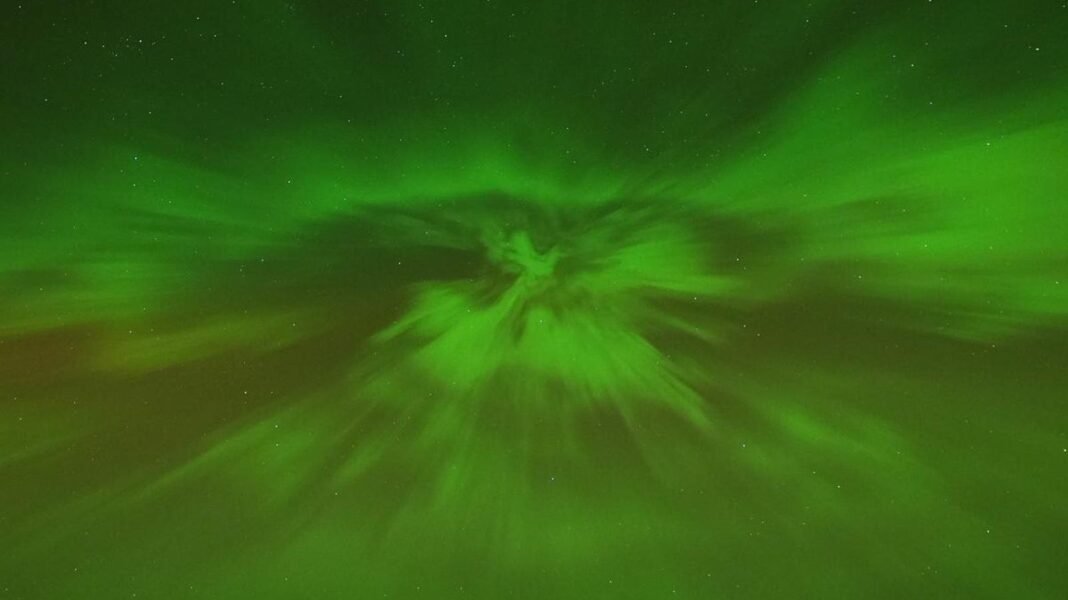
< p >The Northern Lights intensify near equinox periods due totheEarth’saxissidewaysorientationrelative tos olarwindstreams.This alignment enhances geomagnetic activitycausingmore frequentauroraldisplays.Despitevariability,northernregionsfromAlaskathroughScandinaviaoftenexperiencebrilliantaurorasduringlateSeptemberintoearlyOctober.Forecastsfor earlySeptember1-22025indicate heightened aurora chancesacross18USstates,areminderthatsolarweathercanproduceunexpectedspectacles.< / p >
< h3 > Spotting the Andromeda Galaxy (M31): Our Nearest Spiral Neighbor < / h3 >
< p >< em >After dark all month – northwestern sky < / em >
If you look northwestward after darkness falls,you’ll find Cassiopeia’s characteristic “W” shape guiding your gaze toward Mirach,the bright red giant starinAndromeda.frommirach trace downwardabout two-thirdsofthewaytowardthe horizonto locate M31,theAndromedaGalaxy.Itisthefarthestobjectvisibletothenakedeyeatapproximately2500000lightyearsaway.Inurbanareasbinoculars(10x50recommended)can revealits faint fuzzy glow,makingitapopulartargetforevenbeginnerstargazers.