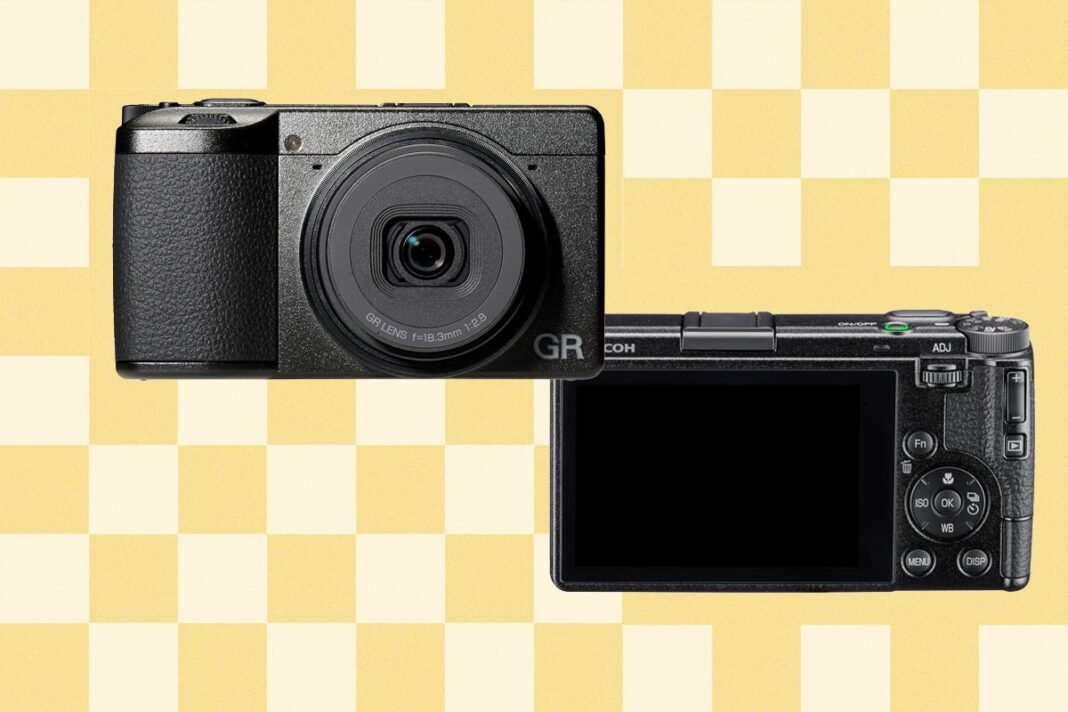
Ricoh GR IV: Redefining Street Photography with a Compact Powerhouse
While major camera manufacturers like Nikon and Sony have recently launched updated models such as the Z5 and A7 series, and Leica introduced a new camera featuring an electronic viewfinder, the Ricoh GR IV quietly stands out as a remarkable contender. This compact device continues to uphold Ricoh’s tradition of delivering exceptional image quality in an ultra-portable form factor, making it highly anticipated among street photography enthusiasts.
compact design Meets Practicality
The Ricoh GR line has earned its reputation over decades as the ultimate pocket-sized camera, tracing back to its film-era origins. The GR IV preserves this heritage by offering photographers a blend of portability and performance that few other APS-C sensor cameras can match. Its dimensions remain nearly identical to the previous model, the GR III-slightly slimmer by millimeters yet marginally heavier-yet these subtle changes are imperceptible during daily use.
This camera slips effortlessly into pockets without awkward adjustments or bulkiness, making it one of the rare APS-C cameras genuinely designed for spontaneous shooting on urban streets or while traveling light.
Ergonomics Tailored for Speed
The control layout has been refined thoughtfully: two unlabeled dials now appear on both front and rear surfaces. unlike before where the rear dial functioned as a rocker switch, it is now a full rotary wheel. By default settings assign aperture control to the front dial and shutter speed adjustment to the rear one-allowing seamless manual operation with just one hand.
Simplifying navigation further, Ricoh removed an outer ring previously encircling the directional pad (D-pad) but added a customizable +/- rocker switch at top right on the back panel for quick exposure compensation tweaks. These enhancements streamline handling without overwhelming users with complexity.
display Features & Battery Performance
The fixed rear LCD screen lacks any tilting or articulating mechanism-a purposeful choice reflecting Ricoh’s focus on straightforward street photography rather than elaborate framing techniques like waist-level shooting common in medium format systems.
Batteries have seen modest improvements; rated now for approximately 250 shots per charge compared to around 200 in earlier versions. While this is progress, carrying spare batteries remains advisable during extended photo walks or travel sessions where recharging opportunities may be limited.
Innovative Storage Solutions
A notable departure from previous models is Ricoh’s decision to adopt microSD cards instead of standard SD cards due primarily to internal space constraints caused by larger battery accommodation. Despite initial concerns about microSD card speeds managing high-resolution photo data streams efficiently-the reality proves reassuring thanks to today’s fast microSD standards combined with generous built-in internal memory totaling 54 GB that acts as reliable overflow storage against card shortages or failures.
Upgraded Imaging System Delivering Crisp Results
- The heart of this model features an upgraded 25.7-megapixel APS-C CMOS sensor replacing last generation’s 24.2 MP unit-a modest numerical increase but noticeable through enhanced detail reproduction and improved dynamic range across diverse lighting conditions;
- The signature fixed focal length lens retains its classic 18.3mm f/2.8 specification (approximately equivalent to 28mm full-frame), yet benefits from redesigned optics boosting sharpness especially toward image edges;
- This combination produces images exhibiting superior clarity with richer tonal gradations straight out-of-camera requiring minimal post-processing effort;
- Video recording remains capped at Full HD (1080p), underscoring that video functionality isn’t central here;
- No comprehensive weather sealing exists beyond dust protection around retracting lens elements addressing prior sensor contamination issues encountered in older iterations.
A Leap forward in Autofocus Technology
If there is one feature compelling enough alone for current owners contemplating upgrading from their GR III units-it would be autofocus enhancements:
- The previous autofocus system was serviceable but occasionally sluggish under challenging lighting or complex scenes;
- The new AF boasts substantially faster acquisition speeds alongside improved subject tracking algorithms including face detection optimized for candid street portraits;
- This system doesn’t rival flagship mirrorless precision but comfortably meets demands typical among urban photographers capturing fleeting moments spontaneously;
- An upgraded five-axis In-Body Image Stabilization (IBIS) offers up to six stops advantage enabling steadier handheld shots despite relatively slow f/2.8 aperture limiting low-light sensitivity otherwise;
- together these improvements make handheld shooting more dependable across varied environments-from dimly lit cafés illuminated only by neon signs through bustling daylight cityscapes filled with motion distractions alike.

Simplified Snap Focus Mode Enhances Spontaneity
A cherished feature returning from earlier generations is snap focus mode-which allows users to preset focusing distance independently from aperture settings enabling rapid capture at predetermined ranges ideal for spontaneous street photography.
This mode can now be accessed directly via dedicated “Sn” position on mode dial letting you lock both focus distance plus aperture concurrently controlling depth-of-field precisely.
This refinement proved invaluable during real-world shoots allowing swift reaction times without menu navigation interruptions mid-action.
Is It Worth Buying? Who Benefits Most?
Priced initially at $1,497 USD-significantly higher than prior launch prices near $999 USD-potential buyers should consider whether incremental upgrades justify investment:
If you own a GR III but find autofocus frustratingly slow or unreliable then upgrading makes sense given tangible gains;
If video capabilities are critical then alternatives offering higher resolutions might suit better;
If your priority lies in uncompromising image quality combined with ultra-portable design plus intuitive single-handed controls tailored specifically towards candid urban shooters-the Ricoh GR IV arguably remains unmatched currently available.
Anticipating Future Variants?