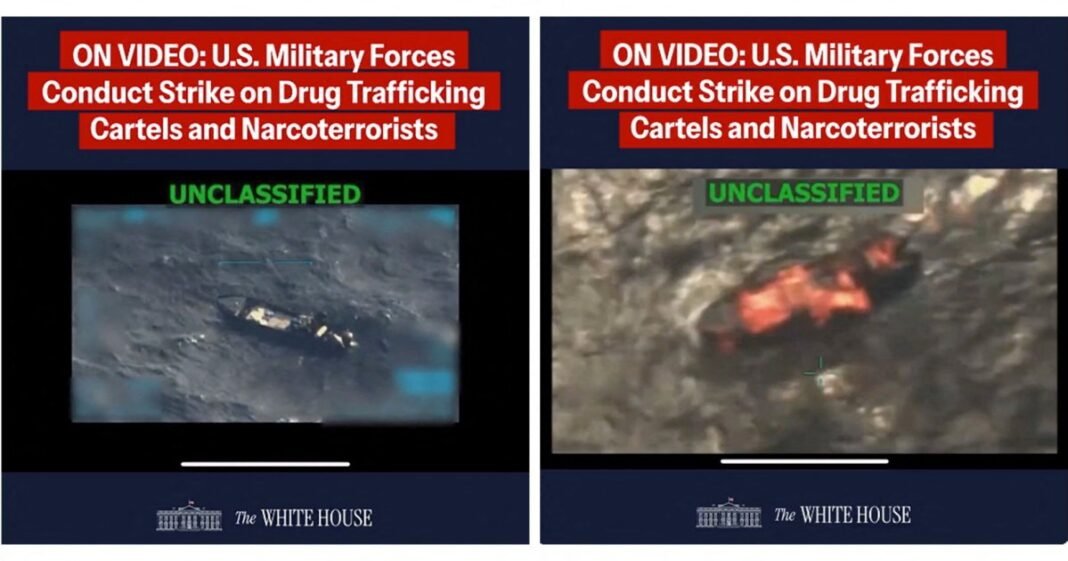
US Military Executes Fourth Deadly strike on Eastern Pacific Vessels Within Four Days
In a span of just four days, US military forces have launched their fourth lethal attack targeting boats in the eastern Pacific Ocean, resulting in the deaths of four people.
Insights into the Recent Naval Engagements
The US Southern Command (SOUTHCOM), responsible for overseeing military operations throughout Latin America and the Caribbean, reported that a missile hit a stationary vessel powered by outboard engines. The strike caused a notable explosion, footage of which quickly circulated across social media platforms.
SOUTHCOM identified those killed as “narco-terrorists,” although no publicly available evidence has been provided to verify this classification.The operation was justified based on classified intelligence suggesting that the boat was operating along known drug trafficking routes in the eastern Pacific and actively engaged in smuggling narcotics.
Accumulated Consequences of Ongoing Military Actions
this recent strike contributes to an increasing death toll now estimated at over 175 as early September. These operations were initiated following directives aimed at disrupting Latin American drug cartels’ maritime smuggling efforts into the United States.
The fatalities include two individuals from Monday’s attack and five others who died during two separate strikes last saturday. After these incidents, US Coast Guard officials discontinued search efforts for one presumed missing survivor from Saturday’s engagements.
Legal and Ethical Debates Surrounding US Naval Strikes
International legal experts and human rights advocates have criticized these actions as extrajudicial killings conducted outside recognized national jurisdictions. There are growing concerns about innocent civilian fishing vessels being mistakenly targeted or caught up in these attacks despite having no proven links to illicit activities.
Authorities stress that if any vessels are suspected of involvement in drug trafficking, those onboard should be detained through lawful procedures rather than subjected to immediate lethal force without trial or due process protections.
Evaluating Effectiveness Against Drug Trafficking Networks
Skepticism remains regarding how much impact these naval strikes have on reducing fentanyl overdoses within the United States.Most synthetic opioids like fentanyl enter primarily via land crossings from Mexico-where precursor chemicals mainly sourced from China and India are used-rather than through maritime routes targeted by these attacks.
Navigating Complex Maritime Security Challenges Today
- The eastern Pacific continues to serve as a vital corridor for various illicit trafficking networks despite intensified military interventions targeting this region.
- Tackling transnational drug supply chains demands comprehensive approaches beyond armed strikes alone; addressing underlying socioeconomic factors is essential for long-term success.
- A recent example includes multinational collaborations emphasizing intelligence sharing and strengthening law enforcement capabilities along Central America’s coastal transit points to disrupt smuggling more effectively.
“Combating maritime narcotics trafficking requires strict adherence to international law while balancing security needs with respect for human rights.”