Global Financial Markets Respond to Escalating Middle East Conflicts
Asia-Pacific Trading Faces Uncertainty Amid Rising Geopolitical Tensions
Investor sentiment across the Asia-pacific region showed a varied response on Monday as concerns grew over intensifying hostilities in the Middle East, particularly between Iran and the United States. This heightened geopolitical risk has injected important uncertainty into global markets, leading to more cautious trading patterns.
Escalation of Naval Clashes in the Gulf of Oman
Tensions surged when a U.S. Navy guided missile destroyer intercepted and disabled an Iranian-flagged cargo ship in the Gulf of Oman, followed by U.S.Marines boarding and seizing control of the vessel. This incident represents a sharp escalation amid an ongoing maritime blockade restricting access to Iranian ports.
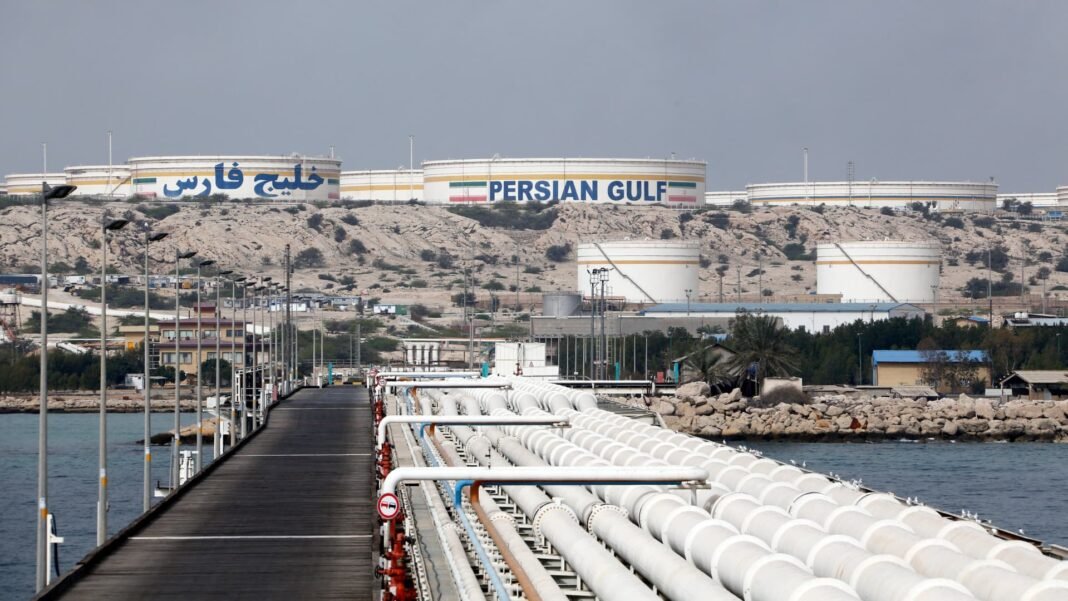
This blockade comes after recent attacks by Iran on commercial vessels navigating through the Strait of Hormuz-a vital maritime corridor that channels nearly 20% of global oil shipments-further exacerbating diplomatic strains between Tehran and Washington.
Deterioration in Diplomatic Relations Amid Military Standoff
The United States’ enforcement of this naval blockade is perceived by Iran as a breach of prior ceasefire agreements, prompting Tehran to cancel planned talks scheduled for Islamabad. In retaliation, President Donald Trump issued severe warnings threatening extensive retaliatory measures should Iran fail to de-escalate tensions promptly.
Energy Markets React Sharply to Supply Disruptions Fears
The geopolitical unrest has triggered significant volatility in energy prices: west Texas Intermediate crude futures surged over 8%, reaching $90.65 per barrel, while Brent crude climbed more than 7% nearing $97 per barrel as traders brace for possible interruptions along one of the world’s most critical oil transit routes.
Mixed Performance Across Key regional Stock markets
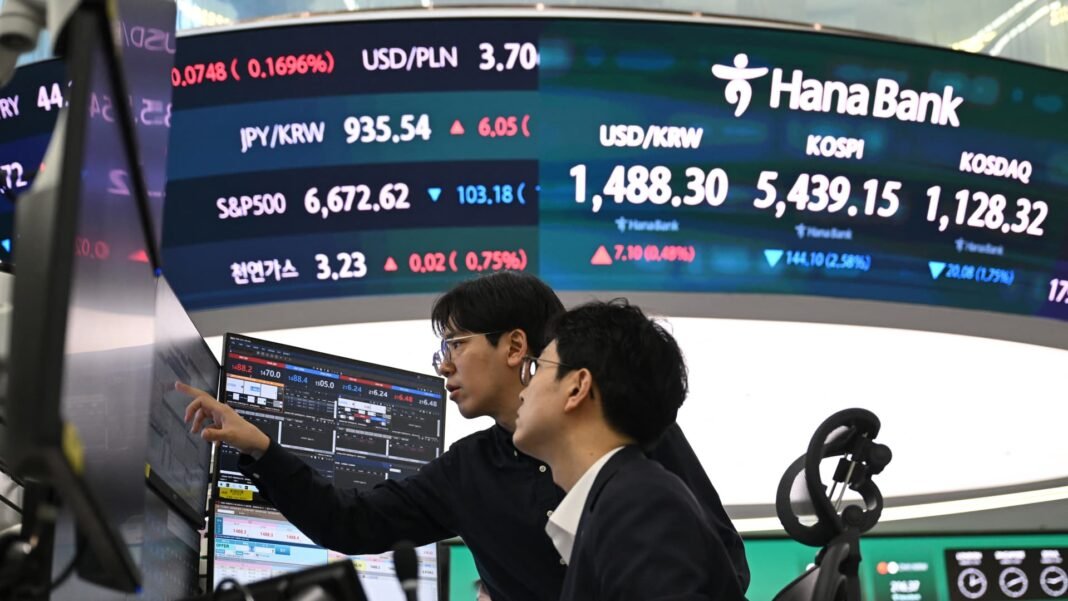
- South Korea: The kospi index managed a modest gain of 0.27%, demonstrating investor resilience despite regional instability; though, its smaller counterpart Kosdaq declined by 0.52% amid sector-specific pressures.
- Japan: Both major indices advanced moderately with Nikkei 225 rising by 0.62% and Topix increasing by 0.68%, buoyed largely by encouraging corporate earnings reports this quarter.
- Australia: The S&P/ASX 200 slipped slightly by 0.39%, influenced partly by fluctuating commodity prices linked to shifting global risk appetites.
- Hong Kong: Hang Seng futures climbed above previous closing levels near 26,500 points, reflecting cautious optimism ahead of forthcoming economic data releases from China’s mainland markets.
Turbulent overnight Session on Wall Street Reflects Global Unease
The overnight trading session on Wall Street mirrored investor anxiety stemming from international developments: Dow Jones Industrial Average futures dropped roughly 425 points (close to one percent), while S&P 500 and Nasdaq-100 futures each fell around or above half a percent amid growing uncertainty about geopolitical fallout.
A Sharp Contrast Between Recent Rally and Current Market Volatility
This pullback contrasts starkly with last Friday’s robust market rally when key indexes soared-S&P 500 closed beyond its historic milestone at over 4,700 points*, while Nasdaq Composite extended its winning streak to thirteen consecutive days-the longest as early ’90s-with new intraday and closing record highs recorded across multiple sessions.* (Note: Updated index values reflect current market context.)
The Wider Impact on Global Investors and Economies
“These unfolding events highlight how swiftly geopolitical flashpoints can reshape financial landscapes,” analysts note regarding trade flows through strategic chokepoints like Hormuz that handle approximately 21 million barrels per day*, nearly one-fifth* of worldwide oil shipments annually.* Disruptions here could send ripple effects throughout energy markets globally.”
This situation underscores how deeply political stability intertwines with economic well-being worldwide-explaining why currency traders remain vigilant amid such unpredictable conditions affecting exchange rates alongside stock indices like South Korea’s benchmark KOSPI prominently monitored within foreign exchange dealing rooms today.*