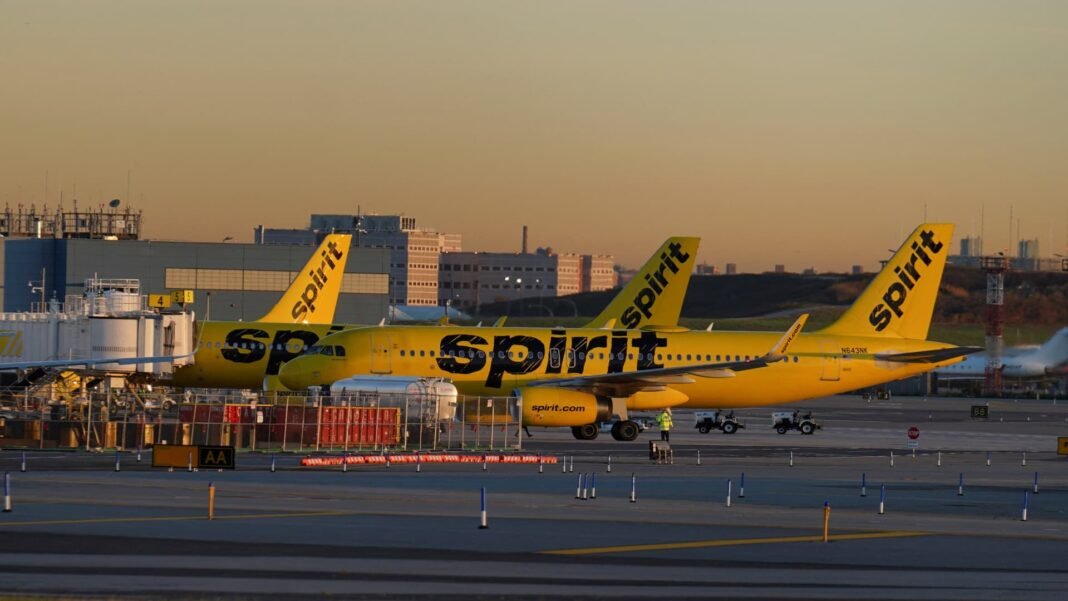
Spirit Airlines on the Verge of Shutdown Amid Escalating Fuel Expenses and Financial Turmoil
Florida-based budget airline Spirit Airlines is reportedly nearing a potential shutdown, possibly within days. Insiders close to the matter indicate that the company’s financial woes have deepened substantially, although no official statement has been released.
Recurring Financial Struggles and Industry Pressures
This situation represents Spirit’s second bankruptcy filing in less than twelve months, underscoring persistent instability. The airline continues to battle soaring jet fuel costs-now one of its largest expenditures after labour-which have surged due to ongoing geopolitical conflicts disrupting global oil supplies.
Despite attempts to optimize operations by concentrating on peak travel times and high-demand routes, Spirit’s turnaround efforts have encountered significant obstacles.Earlier negotiations led pilot and flight attendant unions to accept concessions aimed at sustaining the carrier through these difficult periods.
Industry Shifts and External Challenges Impacting Performance
Historically known for maintaining some of the highest profit margins among U.S. airlines thanks to its ultra-low-cost model, spirit faced major disruptions post-pandemic. Rising wage inflation combined with increased operational expenses altered consumer behavior while an oversaturated domestic market intensified fare competition.
Lacking premium cabins or lucrative loyalty programs left Spirit at a disadvantage compared with larger competitors who attract wealthier travelers willing to pay for first-class amenities or credit card partnerships that generate additional revenue streams.
A significant setback occurred when a Pratt & Whitney engine recall grounded many Airbus aircraft starting in 2023, severely limiting capacity during a critical recovery phase. Furthermore, regulatory authorities blocked JetBlue Airways’ proposed acquisition of Spirit two years ago over antitrust concerns-forcing both airlines into self-reliant survival modes amid fierce competition from giants like American Airlines and Delta Air Lines.
From Optimism to Mounting Losses: A Volatile Financial Journey
In late 2024 bankruptcy filings, Spirit forecasted net profits exceeding $250 million for that year; though, by mid-2025-from March through June-the airline reported losses approaching $260 million shortly after emerging from chapter 11 protection earlier in spring.
This swift downturn highlights how precarious their financial position remains despite restructuring initiatives.By July 2025, burdened by growing debts and operational challenges worsened by fuel prices rising nearly 40% year-over-year (with jet fuel averaging above $4 per gallon at key U.S hubs), Spirit filed once again for Chapter 11 bankruptcy protection.
Navigating Market Demands with Adjusted Strategies
Aiming to attract passengers accustomed to legacy carriers’ premium services, Spirit experimented with upgrades such as wider seating options and bundled fares including seat assignments plus checked baggage fees-all designed to increase ancillary revenues without abandoning their core low-cost identity entirely.
“We do not comment on market rumors or speculation,” said a spokesperson representing Spirit Airlines regarding liquidation reports.
The Wider Airline Sector During Peak Travel Periods
The timing coincides with U.S.-based airlines wrapping up one of their busiest seasons-spring break-which typically generates substantial income but also strains resources amid unpredictable demand patterns following pandemic disruptions.
- Pilot shortages: Staffing deficits continue across many carriers nationwide affecting flight reliability;
- Sustainability efforts: Increasing global pressure pushes airlines toward reducing carbon footprints while balancing cost efficiency;
- Diversification tactics: Competitors heavily invest in loyalty programs targeting business travelers who contribute disproportionately higher profits than leisure customers;
- Mergers & acquisitions scrutiny: Regulatory bodies remain vigilant after multiple blocked deals aimed at consolidating smaller players like Spirit;
- Evolving traveler preferences: Passengers now prioritize versatility alongside price-a challenge for ultra-low-cost models reliant on strict fee structures.
A Reflection on Budget Airline Vulnerabilities Amid Market Volatility

The trajectory experienced by this ultra-low-cost carrier illustrates broader fragilities within budget aviation worldwide where razor-thin margins collide with sudden external shocks such as supply chain interruptions or geopolitical events impacting fuel markets overnight-as recently witnessed when Middle Eastern conflicts caused jet fuel prices in some U.S airports surging beyond $4 per gallon compared with under $2 before the pandemic began.
The Future Outlook: Uncertain Times Ahead for Ultra-Low-Cost Carriers
If liquidation proceeds imminently for this Florida-based airline it will represent one of the most notable collapses among American low-cost carriers sence deregulation reshaped industry dynamics decades ago-a stark reminder that even established brands must continuously evolve amidst shifting economic conditions driven by technological advances alongside changing traveler expectations globally today.