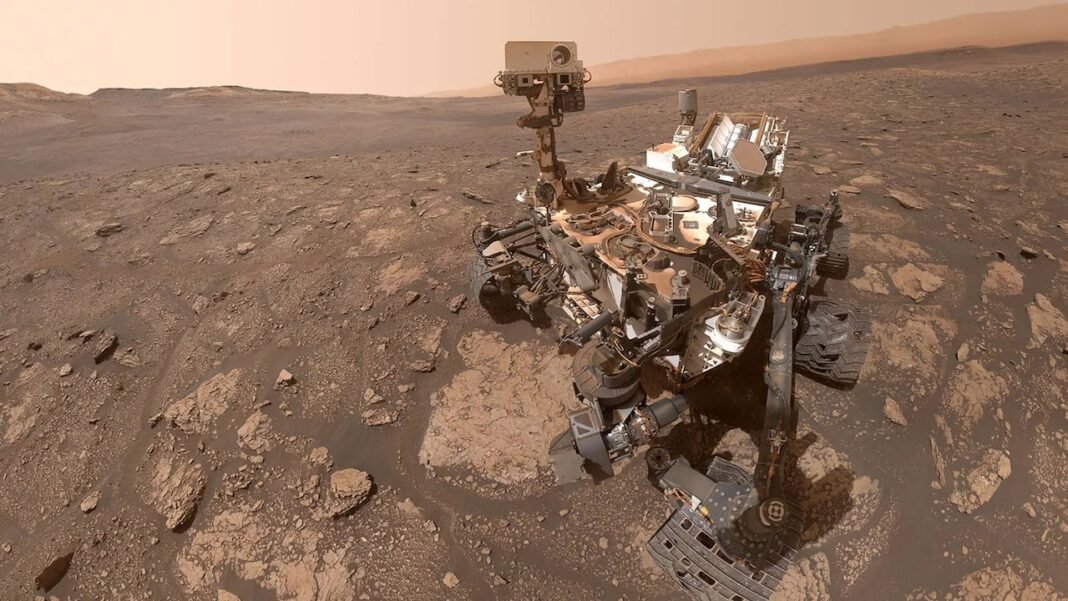
Discovery of New Organic Molecules on Mars by Curiosity Rover
The Curiosity rover has made a groundbreaking discovery by detecting several previously unidentified organic molecules on Mars. These compounds were extracted from ancient sedimentary rocks located in an old lakebed near the planet’s equator,offering fresh insights into Mars’ potential to support life.
Identification of Five Unique organic Molecules
Within rock samples dating back over 3.5 billion years,Curiosity uncovered seven distinct organic compounds,five of which have never been recorded on Mars before. This discovery considerably broadens the known diversity of Martian organics and underscores the complex chemical habitat that existed when liquid water was present on the surface.
Among these molecules is one structurally similar to precursors involved in DNA synthesis, hinting at possible biochemical pathways that might resemble those basic to life on Earth.
The Influence of Ancient Water and Clay Minerals in Preserving Organics
Mars formed approximately 4.5 billion years ago under conditions vastly different from today’s cold desert landscape. Early Mars experienced warmer climates wiht flowing water,creating habitats potentially suitable for microbial life forms.
the Glen Torridon area within Gale Crater-where Curiosity collected its samples-is abundant in clay minerals known for their remarkable ability to safeguard organic materials over billions of years. These minerals act as natural preservatives,shielding fragile organics from destructive processes such as radiation exposure and oxidation.
Techniques Used by Curiosity to Analyze Martian Rocks
The Sample Analysis at Mars (SAM) instrument aboard Curiosity drilled into a bedrock target named “Mary Anning,” honoring a renowned paleontologist who advanced fossil research. The powdered rock was chemically treated onboard to break down complex organics into smaller fragments detectable by SAM’s sensors, enabling detailed molecular identification.
Implications for Understanding Past Habitability on Mars
This research reinforces mounting evidence that early Mars harbored environments capable of supporting life as we understand it-featuring essential elements like liquid water, energy sources, and organic molecules. While some detected compounds could originate from non-biological processes such as volcanic emissions or meteorite impacts, their presence remains critical for evaluating whether microbial ecosystems might have once thrived there.
“Although direct proof of ancient life remains elusive,” stated a member involved with the mission team, “these findings refine our knowledge about which molecular building blocks were available during an era when Earth itself was just beginning its biological evolution.”
Mars Exploration Within a Larger Scientific Framework
- Since landing inside Gale Crater in 2012, Curiosity has delivered invaluable data about Martian geology and chemistry that continue shaping our understanding.
- The Perseverance rover furthers this exploration; recently it identified rock formations possibly altered by microbe-like chemical activity billions of years ago.
- NASA researchers are also probing subsurface reservoirs beneath ice or dust layers where liquid water may persist today-a potential habitat akin to extremophiles found near Earth’s deep-sea hydrothermal vents.
Future Directions: Sample Return Missions and Enhanced Detection Technologies
A conclusive determination regarding past or current Martian life will likely depend on returning samples to Earth laboratories where more sophisticated analyses can be conducted than those feasible remotely. Upcoming missions aim not only to collect these precious materials but also continue surface investigations using advanced instruments designed to detect subtle biosignatures directly on Mars itself.
A Broader Astrobiological Perspective Beyond Mars
This growing body of knowledge informs exploration strategies extending beyond our planetary neighbor:
- Titan: Saturn’s largest moon contains lakes rich in hydrocarbons presenting another intriguing setting where prebiotic chemistry could unfold;
- Europa: Jupiter’s icy satellite hides a vast ocean beneath its frozen crust potentially hospitable for microbial communities;
- An Exoplanet Outlook: Insights into how organic molecules endure harsh environments aid interpretation of atmospheric signals detected around distant exoplanets orbiting other stars today;
Together these endeavors bring humanity closer than ever before toward answering one profound question: Are we alone in the universe?