south Korea’s Stock Market Navigates Intense Volatility amidst Massive Foreign Sell-Offs
foreign Capital Outflows Spark Sharp Market Fluctuations
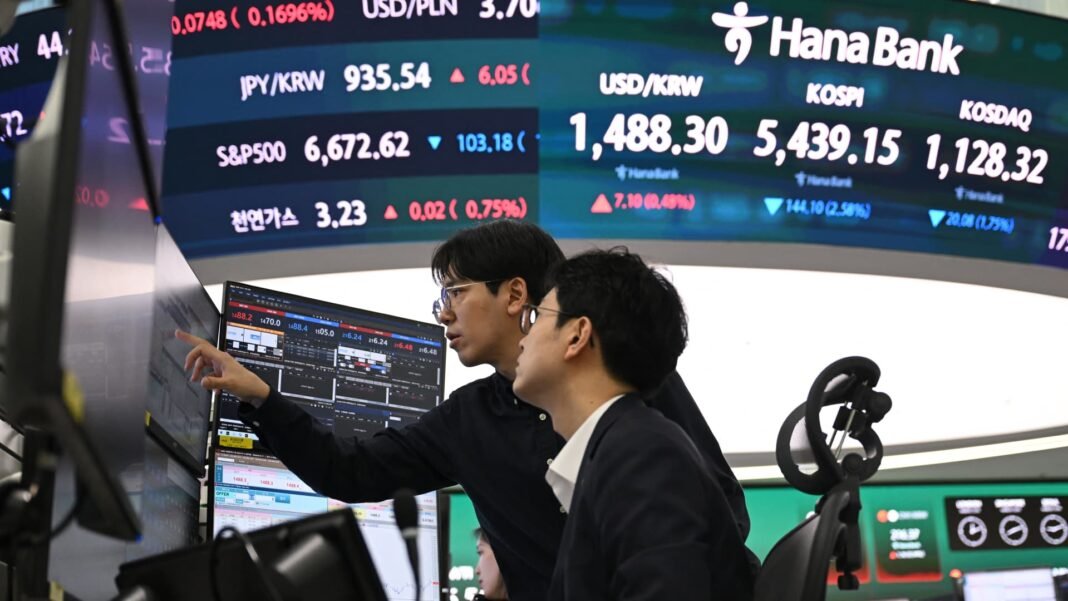
The South Korean stock market has recently encountered significant turbulence,with volatility surging to near-record levels following a considerable foreign investor sell-off totaling $13.2 billion in local equities last week. This large-scale divestment triggered pronounced swings in the Kospi index and led to temporary trading halts on the exchange.
During early trading sessions, the Kospi index tumbled by as much as 4%, extending a steep 6% drop from the previous Friday that erased gains accumulated earlier in the week amid optimism fueled by global summits and strong foreign capital inflows.
Emerging Asian Markets Face Historic Capital Flight
Last week saw overseas investors pull approximately $17 billion from emerging Asian markets outside China, marking one of the largest weekly outflows ever recorded. South Korea was disproportionately affected with $13.2 billion withdrawn, followed by Taiwan at $2.5 billion.
This selling pressure compelled South Korea’s exchange to activate its “sidecar” mechanism-a five-minute pause triggered when Kospi 200 futures fall by 5%-designed to curb algorithmic trading and stabilize market volatility during extreme fluctuations.
Kospi Volatility Index Approaches Early-Year Peaks
The Kospi Volatility Index, which gauges anticipated stock price swings, surged by over 2.5% on Monday alone, nearing highs last seen in March when global markets were similarly unsettled due to geopolitical tensions and inflation concerns.
Retail Investors Propel Momentum but Signal Caution Ahead
The recent rally pushed the Kospi above the historic 8,000-point mark just days before this downturn unfolded. This surge was largely driven by enthusiasm for sectors such as artificial intelligence firms and semiconductor manufacturers alongside robust participation from domestic retail investors.
Citi strategists have cautioned that South Korean stocks appear considerably more overbought compared to U.S. equities-a warning prompting them to halve their bullish exposure on Korean shares as a defensive measure against potential corrections.
This caution is rooted in signs of exuberance among local retail traders who have been aggressively purchasing through margin accounts and leveraged ETFs-behavior reminiscent of speculative episodes like Japan’s tech bubble burst during the late 1990s.
navigating Profit-Taking Without Exiting Completely
Despite these warning signals, analysts do not anticipate an immediate end to south Korea’s bull market given that global financial conditions remain relatively accommodative. The consensus encourages profit-taking rather than full liquidation while expecting continued inflows driven by upcoming MSCI index rebalancing later this year-an event likely to channel passive investments into Korean equities once again.
Global Dynamics Intensify Pressure on Asia’s Leading Markets
A broader backdrop of rising international bond yields combined with escalating geopolitical risks is exerting additional strain on some of Asia’s top-performing stock markets like South Korea’s. as an example,yields on Japanese government bonds recently climbed sharply amid persistent inflation fears coupled with surging oil prices linked directly to ongoing conflicts disrupting supply chains worldwide.
Korean Retail Investors Remain Key Market Participants Despite Turbulence
Goldman Sachs estimates domestic retail investors acquired approximately $14.1 billion worth of shares last week alone-highlighting their vital role as primary buyers amidst heavy foreign selling pressures-and underscoring how local sentiment continues driving short-term momentum despite adverse institutional outflows globally.
- Kospi volatility: Near-record highs following extensive foreign sell-offs;
- Sidelined program trades: Temporary pauses activated after sharp futures declines;
- Cautious optimism: Analysts advise profit-taking while maintaining exposure due to favorable passive inflow prospects;
- Broad influences: Rising global bond yields plus geopolitical tensions heighten uncertainty across Asian equity markets;
- Diverse investor base: Local retail traders sustain demand even amid heightened volatility challenges;
The Outlook for South Korean Equities Moving Forward
The dynamic interplay between aggressive foreign divestment and resilient domestic buying has created an environment marked by sharp price swings; though, underlying structural support remains intact for now. While short-term risks have undeniably increased due to overbought conditions amplified by margin-driven purchases among individual investors, longer-term fundamentals-particularly within technology sectors-keep many strategists cautiously optimistic about growth prospects for South Korea’s stock market through mid-2026 and beyond.