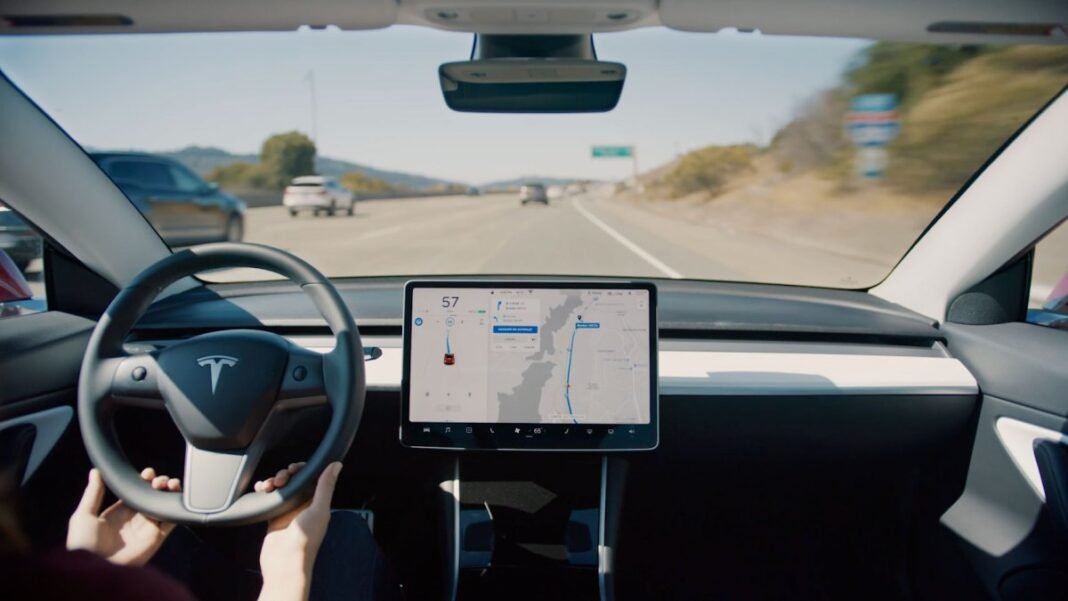
Complete Evaluation of Tesla’s Full Self-Driving Safety Performance
Updated Insights on Tesla’s Full Self-Driving Collision Statistics
Tesla has released a detailed analysis showcasing the safety record of its Full Self-Driving (FSD) system under supervised conditions, presenting new figures on accident rates for drivers utilizing this technology throughout North America. According to the company, vehicles operating with FSD engaged travel roughly 5 million miles between serious collisions and about 1.5 million miles between minor incidents.
How Tesla’s Safety Data Stacks up Against National Benchmarks
This performance substantially exceeds national averages reported by the National Highway Traffic Safety management (NHTSA), which estimates that an average driver experiences a major crash every 699,000 miles and a minor collision every 229,000 miles. Tesla’s data implies that activating their FSD system can considerably lower thes risks.
Understanding Collision Classifications and Data Gathering Techniques
Tesla defines “major collisions” in accordance with Federal Motor Vehicle safety Standards (49 C.F.R.§563.5), identifying them as crashes triggering airbag deployment or other irreversible safety mechanisms. The dataset includes any accident occurring within five seconds after FSD engagement to account for situations where the system disengages shortly before impact or when human intervention occurs.
The company highlights airbag deployment as an objective measure of crash severity since injury data is not directly captured by vehicle sensors; thus, their focus remains on quantifiable collision frequency rather than injury outcomes.
Regular Reporting Reflects Ongoing Software Improvements
Tesla updates these statistics quarterly using a rolling twelve-month window to ensure that reported figures reflect recent software enhancements and evolving road conditions accurately.
Differentiating Between Autopilot and Full Self-Driving Systems
A common criticism of earlier reports was their emphasis on Autopilot-a driver-assistance feature primarily designed for highway driving-rather than focusing exclusively on the more advanced FSD suite intended for complex urban environments. Since Autopilot operates mostly in controlled settings like highways, it generally encounters fewer accidents but does not provide full autonomy or comprehensive city-driving capabilities like FSD aims to deliver.
Collision Rates: A Comparison Between Systems and General Driving Population
- Full Self-Driving Users: Approximately one major accident per 2.9 million miles driven; nearly one minor incident per one million miles based on Tesla’s latest disclosures.
- NHTSA Average Drivers: Roughly one major crash every 505,000 miles; about one minor collision every 178,000 miles according to federal statistics.
The Industry Outlook: Transparency as a Cornerstone for Trustworthiness
The CEO of Waymo recently emphasized how critical transparency is among autonomous vehicle companies operating at scale. Waymo has published extensive evidence demonstrating its robotaxi fleet operates around five times safer than human drivers overall-and twelve times safer regarding pedestrian interactions-while many competitors have yet to provide similarly detailed datasets.
“When companies remove humans from behind the wheel but continue monitoring fleets remotely capable of intervention, they hold duty for openly sharing operational safety data,” industry leaders stated during a recent conference.
“Without transparency, building public trust and enhancing road safety remain unattainable goals.”
Lack of Comprehensive Public Data Raises Concerns About Autonomous Vehicle Claims
This call for openness implicitly challenges firms such as Tesla that have not fully disclosed details about ongoing robotaxi trials or real-world autonomous operations beyond limited quarterly summaries focused mainly on Autopilot usage rather than supervised full self-driving capabilities in diverse environments.
Evolving Realities: Practical Examples Highlight Progress Amid Challenges Ahead
An illustrative case involves pilot programs in Austin where employees stay behind the wheel during robotaxi testing phases-a precaution reflecting current technological constraints while collecting vital operational data before fully driverless deployments become feasible nationwide or globally at scale.
the rapid growth in autonomous vehicle testing underscores promising strides toward reducing traffic accidents through AI-powered systems but also reveals ongoing obstacles related to regulatory approvals and public confidence-both heavily influenced by transparent reporting practices across all stakeholders shaping this transformative industry landscape today.