Financial Markets React to Middle East Conflicts and Oil Price Volatility
Asia-Pacific Markets Face Turbulence Amid Rising Geopolitical Risks
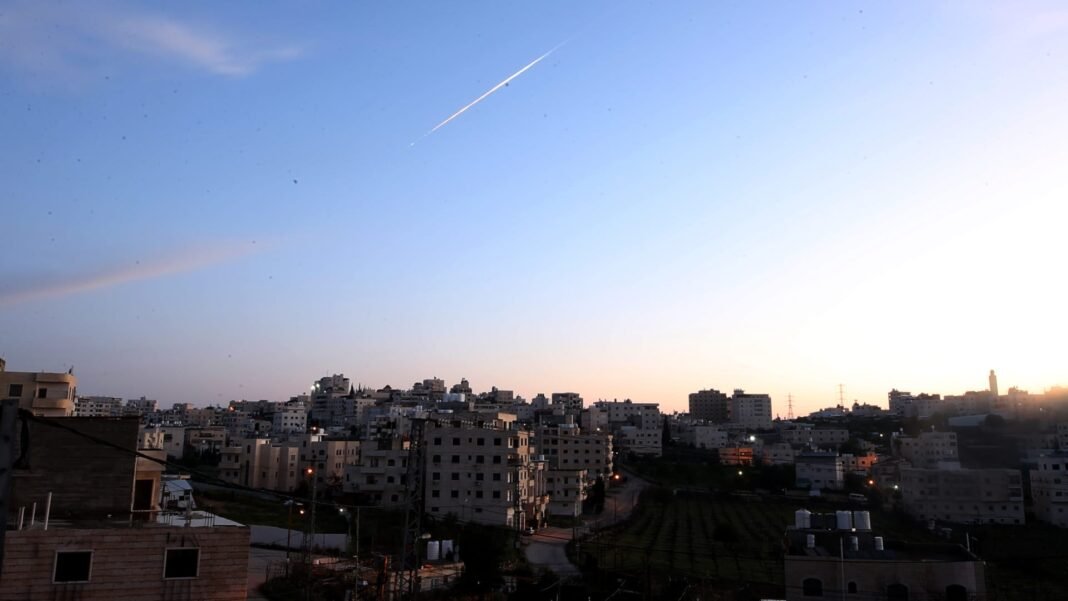
Recent missile launches from Yemen over Hebron in the West Bank have intensified geopolitical tensions in the middle East,triggering notable instability across global financial markets,especially within the Asia-Pacific region.
During Tuesday’s trading session,stock indices across this area experienced pronounced volatility as oil prices reversed earlier gains. This shift followed reports that U.S. leadership was contemplating a reduction in military engagement with Iran to prevent an extended conflict.
Oil market fluctuations Reflect Possible U.S. Policy Changes
May futures for West Texas Intermediate (WTI) crude declined by 0.72%, closing at $102.14 per barrel late Tuesday evening Eastern Time, while Brent crude slipped 1% to $111.55 per barrel after initial intraday increases.
the potential pivot in U.S. strategy involves a willingness to pause military operations against Iran even if the Strait of Hormuz remains largely inaccessible-a critical maritime corridor responsible for nearly one-fifth of global seaborne oil transport prior to recent hostilities.
This reconsideration arises amid growing concerns that reopening this strategic passage coudl prolong conflict beyond an originally anticipated six-week window outlined by American officials.
The Strait of Hormuz: A Crucial Energy Passage Under Pressure
The near-total halt of shipping through the Strait of Hormuz has severely disrupted international energy supply chains since coordinated strikes by U.S. and Israeli forces targeted Iranian assets on February 28th.
Earlier threats from Washington included broad attacks on Iranian civilian infrastructure-such as water desalination plants-if tehran refused to reopen this vital route; however, recent developments suggest a shift toward de-escalation despite ongoing closures.
Differing Market Reactions Across Key Asia-Pacific Economies
- South Korea: the Kospi index dropped sharply by 2.3%, while its smaller-cap Kosdaq fell nearly 1.8%. Simultaneously, the Korean won weakened approximately 0.7% against the dollar, nearing levels last seen during early-2009 financial crises driven by global uncertainty.
- Japan: The Nikkei 225 edged down marginally by about 0.15%, whereas Japan’s broader Topix index managed a slight gain around +0.20%, reflecting cautious investor sentiment amid regional unease.
- Australia: Contrasting with other markets, Australia’s S&P/ASX 200 climbed roughly +0.85%,supported partly by commodity price stabilization and robust domestic employment data indicating stronger-than-expected job growth for Q1-2026.
- Mainland China & Hong Kong: Hong Kong’s Hang Seng Index dipped modestly (-0.35%),while China’s CSI300 remained relatively flat as investors balanced geopolitical risks against government stimulus efforts aimed at countering slowing export demand worldwide.
Currencies Mirror Heightened Investor Caution
The depreciation of South Korea’s currency highlights increased risk aversion among market participants worried about spillover effects from Middle Eastern instability on trade-reliant Asian economies grappling with inflationary pressures and tightening monetary policies globally.
A Global Viewpoint: Energy Security Challenges Intensify
“Disruptions at key maritime chokepoints like the Strait of Hormuz underscore how swiftly geopolitical conflicts can unsettle energy markets,” noted an self-reliant analyst specializing in global supply chain vulnerabilities earlier this year.
This situation recalls incidents such as late-2019 drone attacks that temporarily halted Saudi Arabia’s oil production causing similar market jitters but also demonstrated how diversified supply networks now help mitigate prolonged shocks more effectively than before-thanks largely to increased LNG exports from nations like Australia and Qatar supplementing demand outside conventional routes such as Hormuz or bab el-Mandeb straits.
Navigating Uncertainty: Strategic Considerations Moving Forward
- Avoiding protracted warfare remains critical not only for regional stability but also for preserving fragile economic recoveries across interconnected global financial systems;
- Pursuing diversification strategies-including option shipping corridors and accelerated adoption of renewable energy sources-is becoming increasingly urgent given persistent vulnerabilities exposed;
- Tightening fiscal discipline combined with diplomatic efforts will likely influence market dynamics over coming months as stakeholders seek balance amid volatility driven primarily by geopolitical uncertainties rather than essential supply-demand imbalances;