




One Year On: The Ripple Effects of Trump’s tariffs Across Major U.S. Industries
The implementation of broad tariffs under former President Donald Trump has triggered significant transformations within the American economic landscape. Designed to recalibrate international trade dynamics, these measures have left enduring marks on sectors spanning from retail to pharmaceuticals.
Shifting Trade Policies and Business Adaptations
In early 2025, sweeping tariffs were introduced, imposing a general 10% duty on imports from multiple countries unless specifically exempted. Throughout the year, ongoing negotiations caused frequent policy revisions and partial reversals, creating an unstable environment that forced companies to reevaluate their supply chains and sourcing methods.
Industry analysts estimate that between 80% and 85% of tariff-related costs were ultimately absorbed domestically-either by businesses themselves or passed down to consumers-placing considerable financial pressure on U.S.-based firms.
Rather than abrupt relocations, many corporations adopted gradual diversification strategies for their supply chains. Initial aggressive responses gave way to more measured scenario planning as companies sought long-term resilience amid persistent uncertainty.
Retail Industry: Managing Rising Expenses Amid Complexity
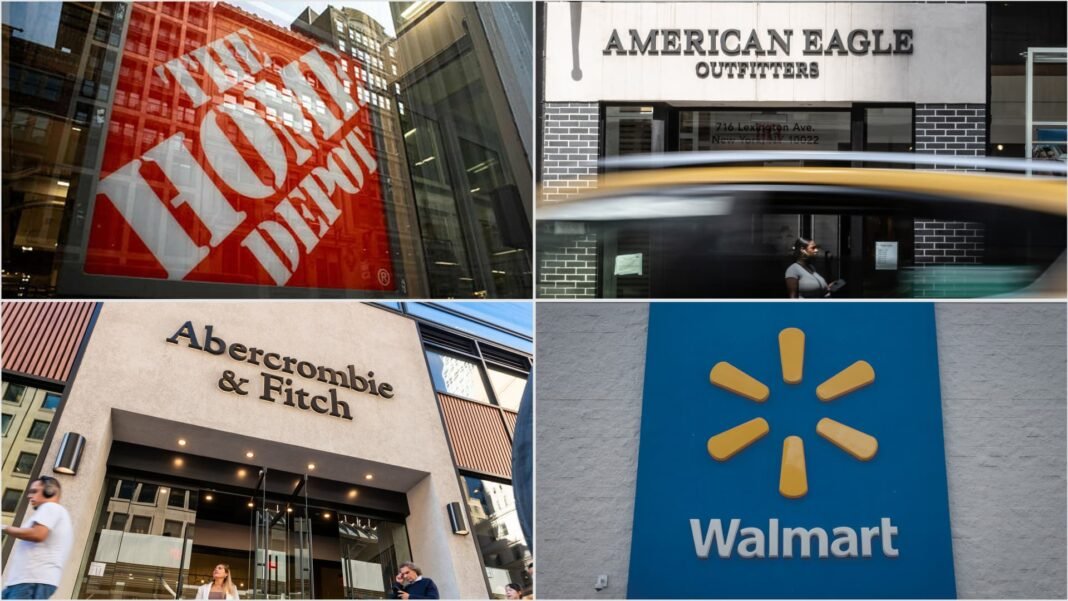
The retail sector has been notably impacted by increased costs stemming from tariffs, with smaller retailers facing greater challenges due to limited scale compared to giants like Walmart. Large chains have leveraged diversified revenue streams and negotiation power to better withstand these pressures; however, smaller businesses often struggled with shrinking profit margins.
A strategic approach is exemplified by Home Depot’s CFO Richard McPhail who highlighted that over half of their products are sourced domestically while ensuring no single foreign country accounts for more than 10% of purchases-minimizing exposure to tariff risks.
Coresight Research president Max Kahn pointed out how retailers accelerated supply chain agility during recent disruptions such as the COVID-19 pandemic; tariffs have further entrenched this versatility as a standard operational practice rather than an exception.
The impact on consumers became apparent through price increases at major stores including Best Buy and macy’s as retailers balanced absorbing higher import expenses with maintaining competitive market positions.
Diverse corporate strategies in Response to Tariff Volatility
- Abercrombie & Fitch: Incorporated a new assumption of a 15% tariff into financial forecasts but did not factor in potential reimbursements following legal decisions overturning some prior duties under IEEPA regulations.
- american Eagle Outfitters: Maintained guidance based on earlier IEEPA-imposed tariffs without adjusting for recent Supreme Court rulings affecting those charges.
- Gap Inc.: Anticipates improved prospects partly due to reduced tariff rates recently enacted compared with previous levels across several countries in its supply chain network.
- Dollar Tree: expressed caution despite some upside potential since existing inventory had already incurred tariffs before judicial changes; also cited geopolitical freight cost risks linked with Middle East tensions impacting near-term operations.
The Automotive Sector: Bearing Billions in added Costs
The automotive industry stands among the most affected by Trump-era trade policies-especially Section 232 national security-based tariffs targeting steel,aluminum,semiconductors,and other critical vehicle components. Domestic manufacturers like General Motors (GM), Ford Motor Company, Stellantis-as well as global players such as Toyota-have reported billions in additional expenses tied directly or indirectly to these levies during fiscal years 2025-26.
Toyota estimated nearly $9.5 billion (around ¥1.4 trillion) in impacts solely from U.S.-imposed duties while GM disclosed $3.1 billion paid last year-a figure lower than initial projections thanks partly to “de-stacking” efforts preventing overlapping charges between parts and finished vehicles.
CFO Paul Jacobson at GM indicated expectations for slightly reduced net tariff burdens heading into 2026 after adjustments made last year helped ease cumulative costs compared with earlier estimates approaching $4.5 billion annually.
A number of automakers are actively reshaping their supply chains toward enhanced domestic production capacity aligned with evolving regulatory requirements; Japanese manufacturers including Nissan Motor Co.,Honda Motor Co., alongside Toyota plan expanded U.S.-based manufacturing footprints coupled with export initiatives aimed at satisfying administration mandates while preserving global competitiveness.
Sustaining Consumer Packaged Goods Amid Raw Material Challenges

“Tariffs alone represent a significant headwind – around five percentage points – against core earnings per share growth,” stated Procter & Gamble’s CFO Andre Schulten during mid-2025 earnings commentary.”
This sector primarily manufactures within U.S borders but relies heavily on imported raw materials such as pulp used in hygiene products or aluminum essential for beverage cans – commodities difficult or costly to replace without incurring delays or added expenses.
An illustrative example is spice producer McCormick which initially projected losses near $70 million mainly due to rising prices for key ingredients like black pepper but successfully curtailed this impact closer toward $20 million through expense reductions plus selective sourcing favoring countries subject only to lower duties.
Larger conglomerates such as Procter & Gamble reported nearly $1 billion annualized effects attributable directly or indirectly from import taxes necessitating price hikes across roughly one-quarter of their product lines.
< p > Beverage maker Constellation Brands estimated about a $20 million hit related specifically aluminum can tariffs expected throughout fiscal ’26.
< p > A notable exception was J.M Smucker Company which opted not pass higher coffee packaging costs onto customers despite multiple planned price increases earlier that fiscal cycle citing executive orders excluding green coffee beans among factors enabling margin absorption instead.
The Pharmaceutical Industry: Navigating Trade Tensions Through Pricing Agreements And Investment boosts
This industry has fared comparatively better amid trade disputes largely due to agreements forged between drugmakers and government officials aimed at lowering medicine prices while securing exemptions from certain pharmaceutical-specific import levies.
- A coalition exceeding twelve major pharmaceutical firms-including Pfizer, Eli Lilly, Merck, Gilead Sciences Bristol Myers Squibb plus international players Novo Nordisk GlaxoSmithKline Novartis-committed under “most favored nation” pricing frameworks linking US drug prices more closely abroad while agreeing investments boosting domestic production capacity over coming years.
- Tariffs imposed under Section 301 remain applicable only against non-compliant entities-with penalties reaching up to 100% duty rates applied selectively depending upon company adherence timelines regarding local manufacturing expansions.
- This environment spurred renewed capital deployment within pharma manufacturing facilities exemplified by abbvie pledging upwards of $10 billion investment spanning next decade including four new plants Johnson & Johnson committing over $55 billion similarly focused primarily inside United States borders.