Enhancing Military autonomy Thru AI-Powered Ground Vehicles
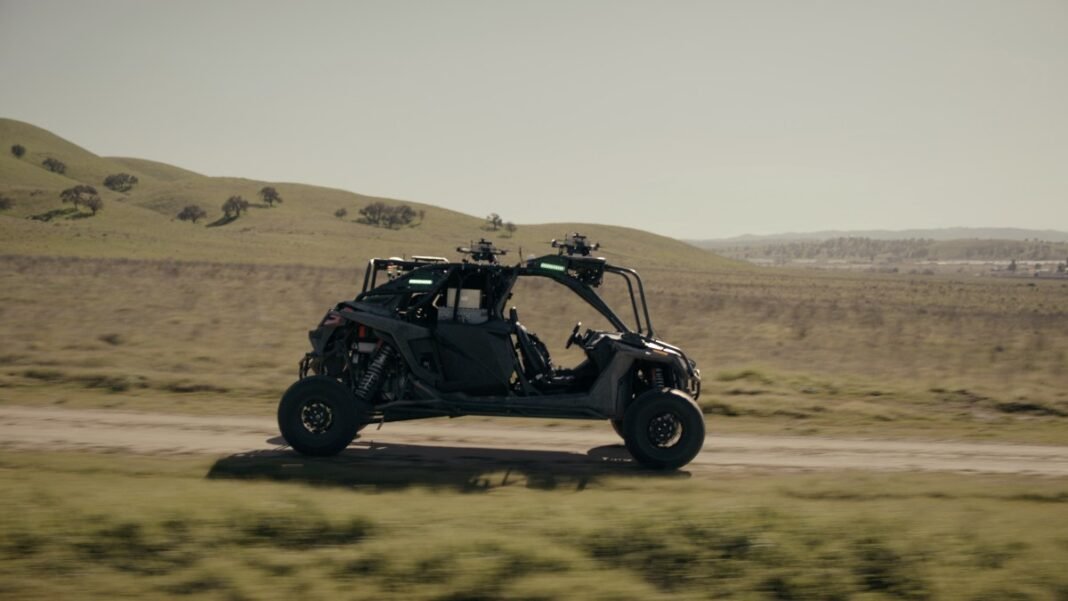
In the rugged landscapes of central California, autonomous four-passenger all-terrain vehicles (ATVs) are being tested on demanding trails as part of an innovative military training program. Unlike traditional drills centered on human soldiers, this initiative focuses on developing artificial intelligence systems capable of self-reliant operation in combat environments.
Scout AI: Pioneering Autonomous Defense Technologies
Founded in 2024 by Coby Adcock and Collin otis, Scout AI is at the forefront of this technological evolution. The startup recently raised $100 million in Series A funding led by Align Ventures and Draper Associates,following a $15 million seed investment.Their objective is to engineer sophisticated AI models that autonomously control military assets with minimal human intervention.
Their primary system,dubbed “Fury,” initially supports logistical operations but is being advanced toward commanding autonomous weapon platforms. CTO Collin otis compares Fury’s development to training soldiers-starting from basic knowledge and progressively refining skills for specialized battlefield roles.
From Foundational Intelligence to Combat-Ready Autonomy
“Just as recruits begin their service with fundamental training,” Otis explains, “our AI models start from a baseline level and undergo rigorous instruction to evolve into highly specialized military agents rather than general-purpose intelligences.”
Scout AI has secured contracts totaling $11 million from key defense entities including DARPA and the Army Applications Laboratory.Their technology currently supports the US Army’s 1st Cavalry Division during exercises at Fort Hood, Texas-a proving ground where autonomous systems are rigorously evaluated ahead of anticipated deployment around 2027.
tackling Off-Road Challenges Beyond Urban Autonomy
While self-driving cars have made significant strides navigating city streets governed by traffic laws and clear signage, off-road autonomy presents far more complex challenges. Operating without defined paths or predictable conditions requires advanced perception capabilities and dynamic decision-making algorithms.
Drawing from his tenure at Kodiak Robotics-an autonomous trucking company-Otis highlights this gap: “The systems I helped develop were not designed for unpredictable environments like battlefields.” This insight motivated him to co-found Scout AI with a mission focused on robust autonomy tailored for combat zones.

The Innovation Behind Vision Language Action Models (VLAs)
A core breakthrough enabling Scout’s approach lies in Vision Language Action models (VLAs), which fuse large language models (LLMs) with visual data inputs to direct robotic behavior effectively. Originating from Google DeepMind research in 2023, VLAs have sparked new robotics ventures such as Physical Intelligence and Figure.AI-the latter led by adcock’s brother brett.
“If you gave someone control over a drone today along with immersive visual feedback, they could master its operation within minutes because vlas connect existing knowledge through intuitive controls-that’s how robot learning accelerates,” says Otis.
Field Trials Demonstrate Real-World Capabilities
I personally experienced piloting one of these ATVs across steep slopes blanketed with loose gravel alongside complex trail junctions-a setting far more demanding than typical urban roads. Despite limited prior ATV experience myself, I adapted well after six weeks under the company’s structured training program that began using civilian vehicles before transitioning fully into military-grade hardware.
The vehicle’s autonomous mode was especially extraordinary; it accelerated assertively while maintaining precise trail adherence-adjusting its path based on trail width-and exhibited cautious behavior when uncertain by slowing momentarily before proceeding carefully along a 6.5 km loop back to base camp.
The Emerging Role of Autonomous Vehicles in Military Logistics
The initial practical applications focus on automated resupply missions delivering essentials such as water or ammunition across challenging terrain where manned convoys face heightened risk or inefficiency. For instance, during recent nighttime exercises conducted under harsh Alaskan conditions without visibility aids, infantry officer Brian Mathwich expressed strong interest in deploying unmanned support vehicles alongside his unit for improved safety and operational effectiveness.
Sophisticated Command Software amplifies Soldier Effectiveness
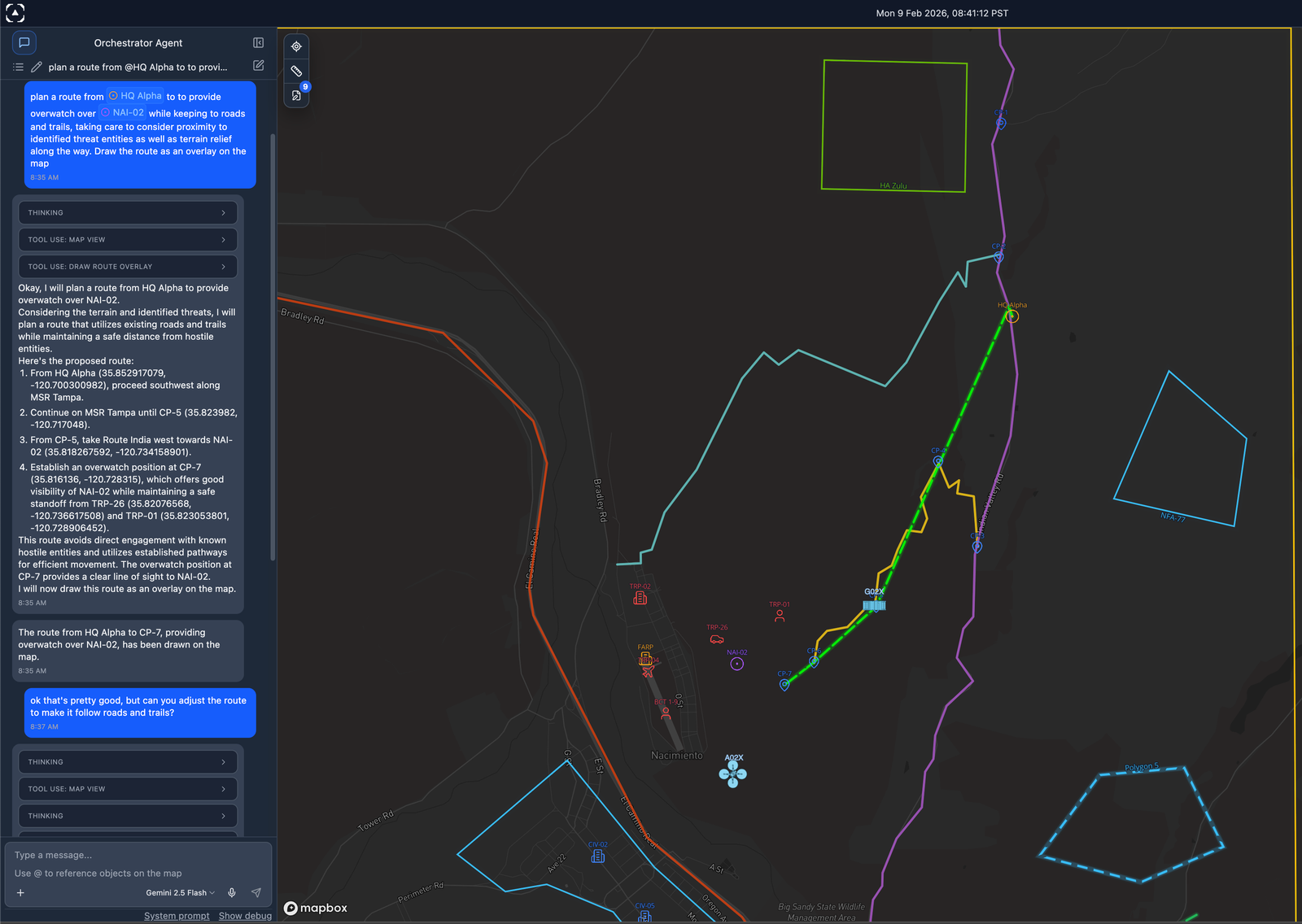
Rather than manufacturing physical platforms themselves, Scout positions its core offering as an intelligence software provider that overlays existing vehicles with advanced autonomy layers.
the upcoming product “Ox” integrates command-and-control features bundled into ruggedized hardware equipped with GPUs alongside communication arrays and cameras. This solution enables individual soldiers to manage fleets of drones or ground robots via intuitive prompt-like commands such as “Proceed here; monitor enemy activity.” Training these intelligent agents involves extensive real-world data collection at their dedicated foundry range where operators log intervention points during eight-hour shifts.
Pursuing Fully Autonomous Operations Through Reinforcement Learning
This iterative feedback process allows continuous betterment via reinforcement learning algorithms based both on live trials over uneven terrain trails and also simulated scenarios.
This approach aims ultimately for fully independant navigation beyond marked routes while adhering strictly to safety protocols similar to human drivers who instinctively reduce speed when uncertain about next moves.
Drones Equipped With Advanced Multi-Modal Intelligence For Reconnaissance And Combat Support
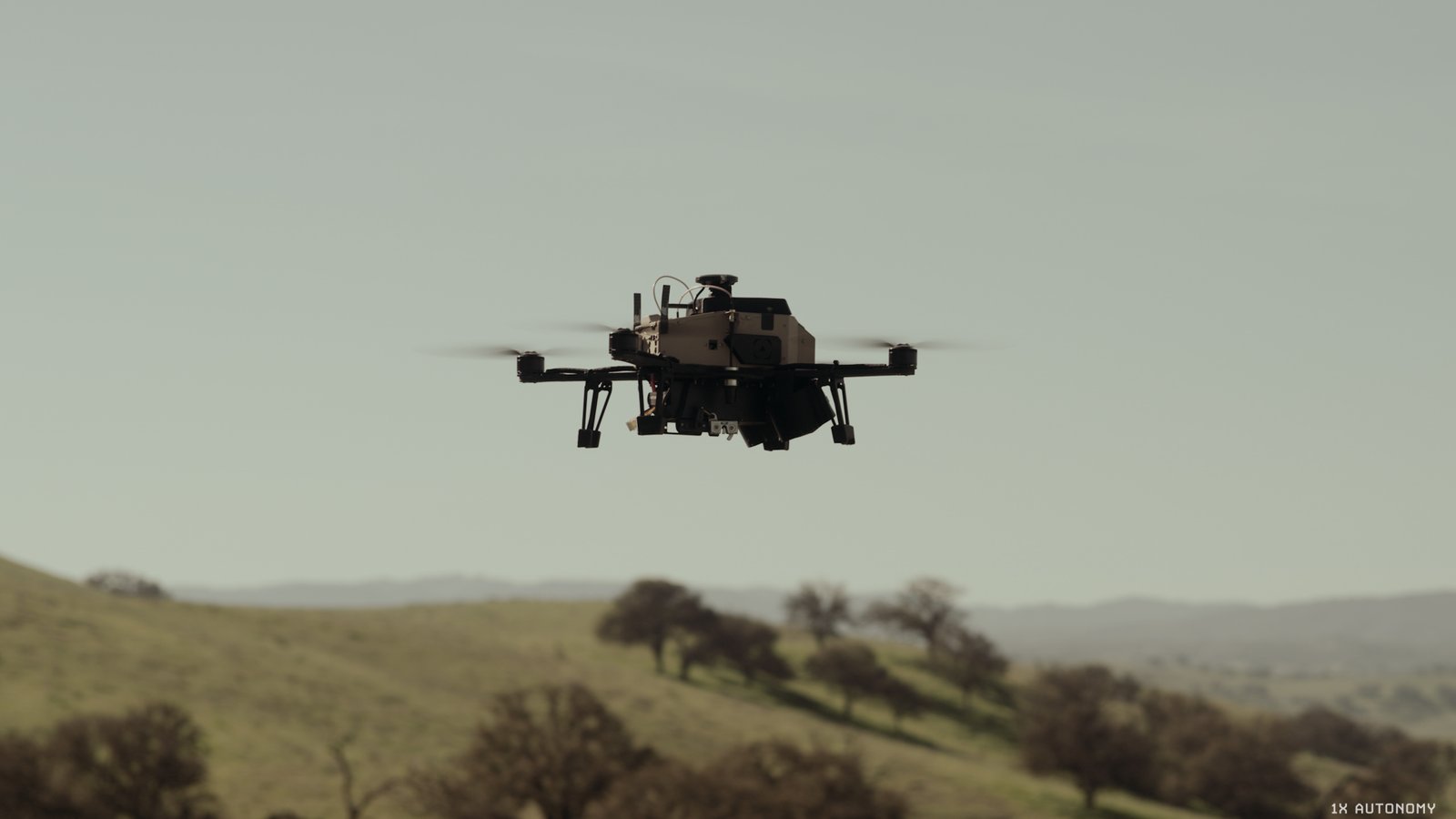
Beyond terrestrial vehicles, Scout also develops drone swarms powered by vision-language multi-modal LLMs. These include smaller munitions drones coordinated through larger “quarterback” platforms providing computational oversight.
In tactical scenarios, swarms can autonomously detect concealed enemy armor units then engage targets precisely – potentially reducing reliance upon less accurate indirect artillery fire. “Precision strikes enabled through intelligent coordination offer significant battlefield advantages,” says CTO Collin Otis.</P>
Recent conflicts exemplified by Russia’s invasion of Ukraine have intensified interest around drone warfare tactics but also exposed limitations related t o manpower scaling when humans pilot each UAV individually.&nbs pAdams stresses future conflicts will necessitate semi-autonomous swarm management technologies able t o counter massed low-cost unmanned threats efficiently.</ P>
Championing Defense Innovation Amid Industry Reluctance
unlike some tech companies hesitant about government collaborations-as seen when major corporations withdrew from Pentagon projects involving drone swarm controls-Scout openly embraces defense partnerships aimed directly at national security challenges .& nbsp ;Otis remarks ,”Many leading AIlabs avoid working w ith missile systems or attack drones ,but we see it essential.”& nbsp ;This commitment persists despite ethical complexities inherent i n weaponized autonomy progress .& nbsp ;
< H 2 >Building On Existing Large Language Models While Developing Proprietary Advances < / H 2 >
< P >Currently ,Sc out leverages pretrained LLMs sourced via agreements w ith prominent cloud providers though specifics remain confidential .Ot is acknowledges plans t o develop proprietary foundation models optimized f or continuous real-world interaction-driven learning – potentially accelerating progress toward artificial general intelligence (AGI).He observes :”Reading internet data alone limits intelligence growth ; true advancement comes f rom embodied world engagement.”
No rivalry exists between Adcock ‘ s work building scalable battlefield solutions versus his brother ‘ s humanoid robot startup.Far from competing ,the Pentagon ‘ s vast asset base offers unmatched scale opportunities accelerating deployment timelines compared t o commercial robotics ventures alone .