Best Locations and Times to Experience teh Northern lights This Week
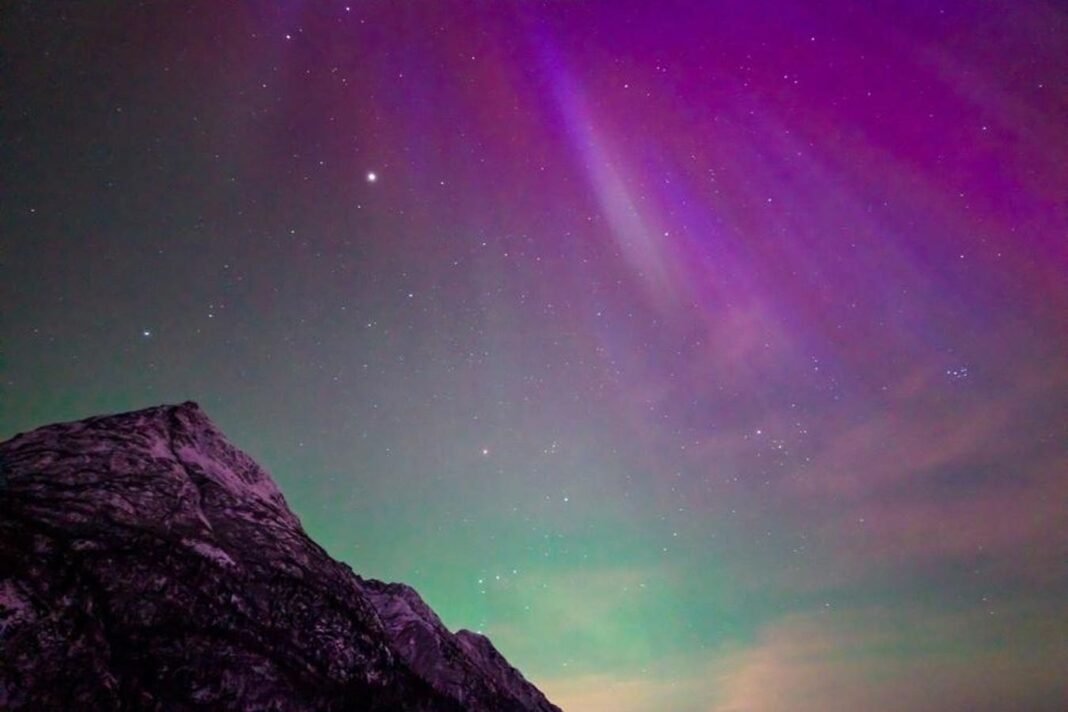
Monday night offers a rare opportunity for residents in 24 U.S. states to witness the captivating northern lights, as predicted by space weather experts. The most intense auroral displays are anticipated near the northernmost parts of the country, promising a spectacular natural show.
What Aurora Activity Levels Mean for Viewers
The geomagnetic activity index, known as the Kp index, is forecasted at level four on Monday evening. This suggests that those situated within prime viewing areas could see vivid auroras lighting up the night sky. Although chances drop considerably on Tuesday,Wednesday’s aurora visibility extends further south-reaching as far as southern Iowa-while remaining clearer closer to northern latitudes.
Top states for Northern Lights Sightings
The aurora borealis is expected to be visible across a broad swath of states from Alaska through much of the northern continental United States, including:
- Alaska
- Northern Washington and Idaho
- Largely Montana and northeastern Wyoming
- North Dakota, northern South Dakota, northeast Nebraska
- Minnesota, most of Iowa, Wisconsin
- Northern Illinois and Indiana
- The Upper and Lower Peninsulas of Michigan
- Northern Ohio and large parts of Pennsylvania
- Northern New Jersey extending through New England states such as New york, Connecticut, Rhode Island, Massachusetts, Vermont, New Hampshire, and Maine.
The highest probability for witnessing this dazzling phenomenon lies in Alaska along with northern Montana, North Dakota, and Minnesota.
Ideal Viewing Conditions for Aurora Borealis Enthusiasts
The prime window to observe these shimmering lights is between 10 p.m.and 2 a.m., when geomagnetic activity reaches its peak intensity. To enhance your chances:
- Avoid locations with heavy artificial light pollution like urban centers.
- Choose nights with little or no moonlight to increase contrast against dark skies.
- select elevated spots such as hills or open fields that offer clear views toward the horizon without obstructions.
How to Capture Stunning Photos of Auroras
If you plan on photographing this celestial event:
- Use a reliable tripod to eliminate camera shake during long exposure shots.
- Select wide apertures (f/2.8 or lower) paired with high ISO settings appropriate for your camera model.
- Avoid flash photography; instead use manual focus set at infinity or focus on distant stars for sharp images.
The Science Behind Recent Increases in Aurora Displays
this past weekend featured strong auroral activity across about 20 states due to minor geomagnetic storms caused by solar wind disturbances interacting with Earth’s magnetic field. The sun recently peaked around October 2024 during its roughly 11-year solar cycle maximum phase-a period linked with heightened frequency and intensity of global aurora events throughout this year.
An illustrative example occurred last month near Fairbanks where residents enjoyed hours-long multi-colored light shows under clear skies following meaningful solar flare events detected by space weather satellites.
This surge tied to the current solar cycle means enthusiasts should stay vigilant over coming months as opportunities may become more frequent compared to quieter years previously experienced.
“When charged particles from our sun collide with Earth’s atmosphere they create one of nature’s most mesmerizing spectacles – an ever-shifting dance painted across polar skies.”