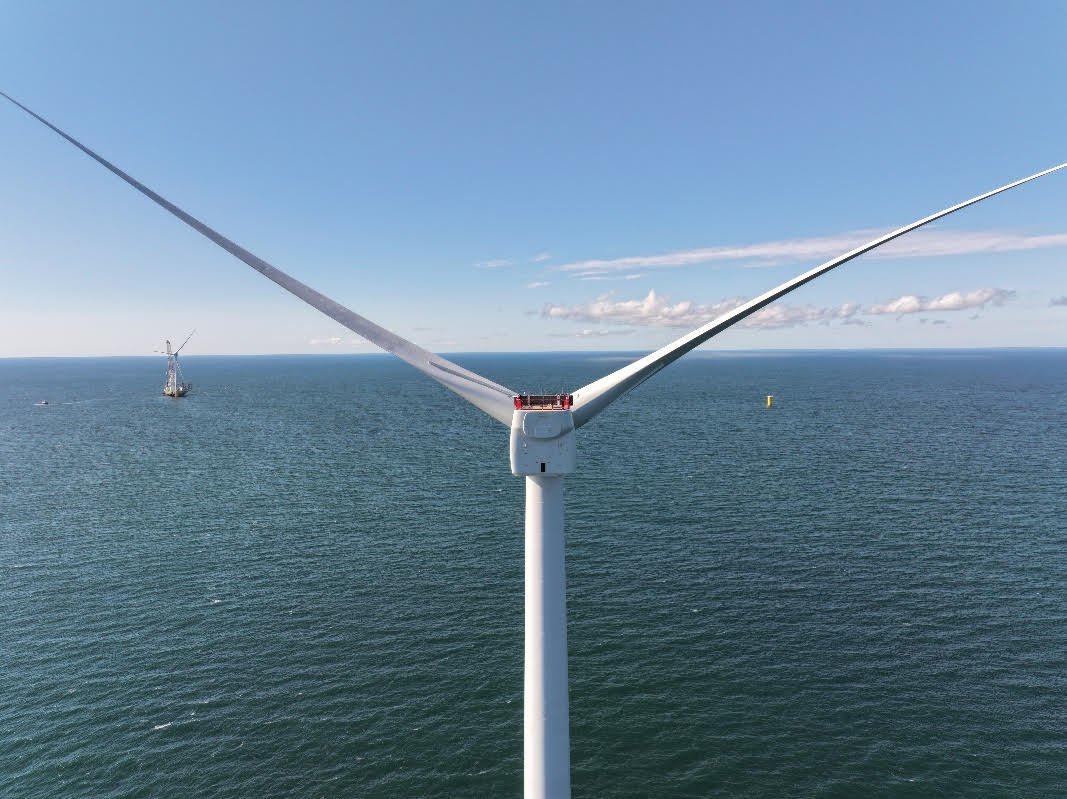
National Security Concerns Lead to Temporary Halt on Offshore Wind Leasing
Teh U.S.government has recently announced a suspension of leasing activities for five prominent offshore wind projects along the East Coast,citing concerns over potential interference with radar systems and broader national security implications. This decision comes after a court overturned an earlier executive order that had limited offshore wind progress in these areas.
Offshore Wind Projects Affected by the Moratorium
The pause impacts several key initiatives including Revolution Wind off Connecticut and Rhode island, Coastal Virginia Offshore Wind, vineyard Wind near Massachusetts, as well as Empire Wind and Sunrise Wind located off New York’s shoreline. Together, these projects aim to deliver close to 6 gigawatts of renewable energy capacity-enough electricity to power millions of households-and are situated in regions experiencing rapid expansion in data center infrastructure.
Government Rationale and Security Review Process
The Department of the Interior cited both unclassified governmental assessments and recent classified reports from the Pentagon as justification for this leasing freeze but did not disclose wich specific agencies authored these documents or make them publicly available. The department stressed that this interval will enable federal entities to work closely with industry stakeholders to address emerging security risks associated with large-scale offshore wind farms positioned near densely populated coastal zones.
Interestingly,official communications omitted any reference to longstanding collaborative efforts between federal agencies and industry players aimed at mitigating radar interference caused by wind turbines-a challenge extensively researched over more than ten years.
Understanding Radar Interference from Turbine Blades
Wind turbines can disrupt radar operations because their rotating blades produce complex Doppler effects-frequency shifts resulting from motion relative to radar receivers. As blades spin toward or away from radar installations at varying speeds and angles, they generate signals that may obscure or imitate other objects on radar displays.
“The dynamic reflections created by spinning turbine blades complicate accurate target detection near wind farms,” noted Nicholas O’Donoughue, senior engineer at Rand Corporation. “Advanced adaptive algorithms function similarly to noise-cancelling headphones by filtering out unwanted signal interference.”
Innovations Reducing Radar Disruption Risks
A February 2024 report from the Department of Energy highlights ongoing research focused on minimizing turbine-induced radar interference through complex signal processing methods such as Space-Time Adaptive Processing (STAP). These techniques identify consistent patterns generated by turbines over time and suppress them without degrading overall radar performance.
While no current technology completely restores all affected radars’ capabilities, cooperative efforts between government agencies and renewable energy developers have allowed critical surveillance missions to continue alongside meaningful offshore wind deployment nationwide.
Siting Practices Enhance Technological Solutions
An essential strategy involves carefully positioning turbines outside direct lines-of-sight from sensitive radar sites. By optimizing farm layouts in this way, developers reduce interference risks while maintaining high levels of energy production-a practice increasingly incorporated into planning phases for new projects across various coastal regions.
The Intersection of Clean Energy Growth and National Defense Priorities
This recent leasing suspension highlights the complex challenge of balancing rapid expansion in clean energy infrastructure-which is vital for meeting climate targets-with protecting national defense systems dependent on uninterrupted surveillance capabilities. With global offshore wind capacity expected to surpass 100 gigawatts by 2030 according to current projections, resolving technical hurdles related to radar compatibility remains crucial for lasting development along heavily trafficked coastlines worldwide.