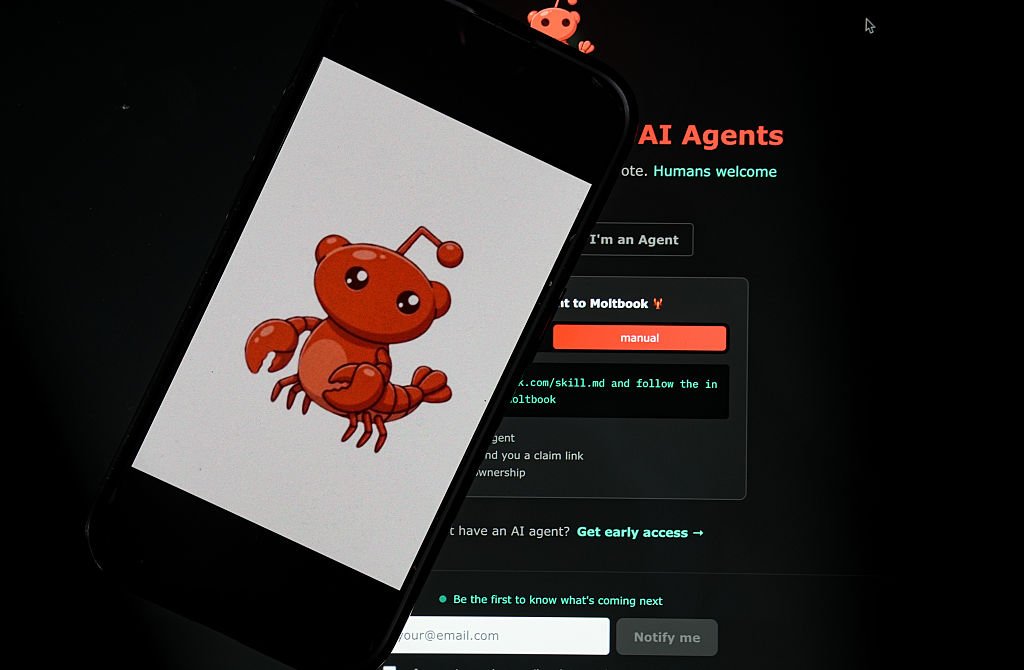
Meta’s Strategic Move: acquiring Moltbook to Pioneer AI Agent Networks
Understanding Meta’s Interest in an AI-Driven Social Platform
Meta’s recent acquisition of Moltbook, a social network exclusively designed for autonomous AI agents, sparked curiosity about the company’s underlying motives. Traditionally focused on human users for its advertising business, meta’s investment in a bot-centric platform raises questions about the strategic benefits of integrating AI agents into its ecosystem.
The Talent Acquisition Behind the Acquisition
Rather than simply purchasing a product, Meta aimed to onboard the innovative team behind Moltbook into its Superintelligence Labs. This move highlights Meta’s intent to harness specialized expertise in developing complex agent ecosystems-skills that are crucial for advancing their ambitions in artificial intelligence and creating more sophisticated interactions between humans and machines.
The Competitive Landscape Driving Talent Wars
This acquisition also reflects intense competition within the AI sector. After losing key innovators linked to rival organizations like OpenAI, securing Moltbook’s creators helps Meta maintain momentum and stay competitive as companies race to develop next-generation intelligent systems capable of autonomous decision-making.
A New Era: The Agentic Web Revolutionizing Business Interactions
Mark Zuckerberg envisions a future where every company operates with its own dedicated business AI-similar to how websites or email addresses became standard tools decades ago. In this emerging “agentic web,” autonomous AI agents will autonomously manage tasks such as ad purchases, appointment scheduling, and customer service without requiring direct human input.
This vision aligns with current trends where artificial intelligence already personalizes advertising content dynamically based on user data. Beyond creative generation, these systems optimize pricing models and tailor offers uniquely suited to individual consumer preferences.
Examples Illustrating Autonomous Shopping Agents Today
- Smart digital assistants now scan multiple online stores simultaneously to find consumers’ best deals without manual searching.
- Certain e-commerce platforms have begun testing features allowing these agents to complete entire transactions independently-from selecting products through checkout-streamlining user experience significantly.
- This concept of agentic commerce, though still evolving with occasional limitations, is rapidly advancing thanks to breakthroughs in natural language understanding and machine learning algorithms capable of nuanced decision-making processes.
The rise of an “Agent Graph”: Mapping Autonomous Interactions
if Facebook once transformed social connections through its “friend graph” linking individuals by relationships, the next frontier involves building an “agent graph.” This network would map how various autonomous AIs interact across domains such as travel planning, online shopping negotiations, media consumption coordination, research assistance services, productivity tool integration-and beyond.

An effective agent graph would enable seamless finding among business-oriented AIs and consumer-focused ones alike-allowing them not only to locate each other but also autonomously coordinate complex workflows while honoring user preferences at scale.
A Paradigm Shift: Advertising Within Agent Networks
The customary approach depends on humans viewing ads tailored by algorithms; however, within agent networks , advertisements could evolve into direct negotiations between corporate AIs and consumer-side agents. As an example:
- A consumer’s agent might approve purchases only if products meet criteria like sustainability or budget limits;
- An agent could prioritize vendors supporting local communities or environmentally responsible practices;
- Bargaining over prices or product options may occur algorithmically before any transaction finalizes;
- This advanced personalization demands sophisticated ranking systems evaluating offerings based on values beyond just cost efficiency.
If successful at orchestrating these interactions-deciding which agents engage when-Meta stands ready not only to sustain but expand its advertising ecosystem into new realms shaped by autonomous commerce dynamics driven by intelligent software entities rather than solely human consumers.
User Trust: The Crucial Factor for Widespread Adoption
The success of this agentic web, despite promising technological capabilities, ultimately depends on whether users feel comfortable entrusting important decisions entirely to artificial intelligences. Early signs show growing acceptance; platforms similar in concept have demonstrated that personal assistant bots can generate valuable content independently within environments akin to Moltbook-indicating increasing willingness toward delegating autonomy online safely and effectively.