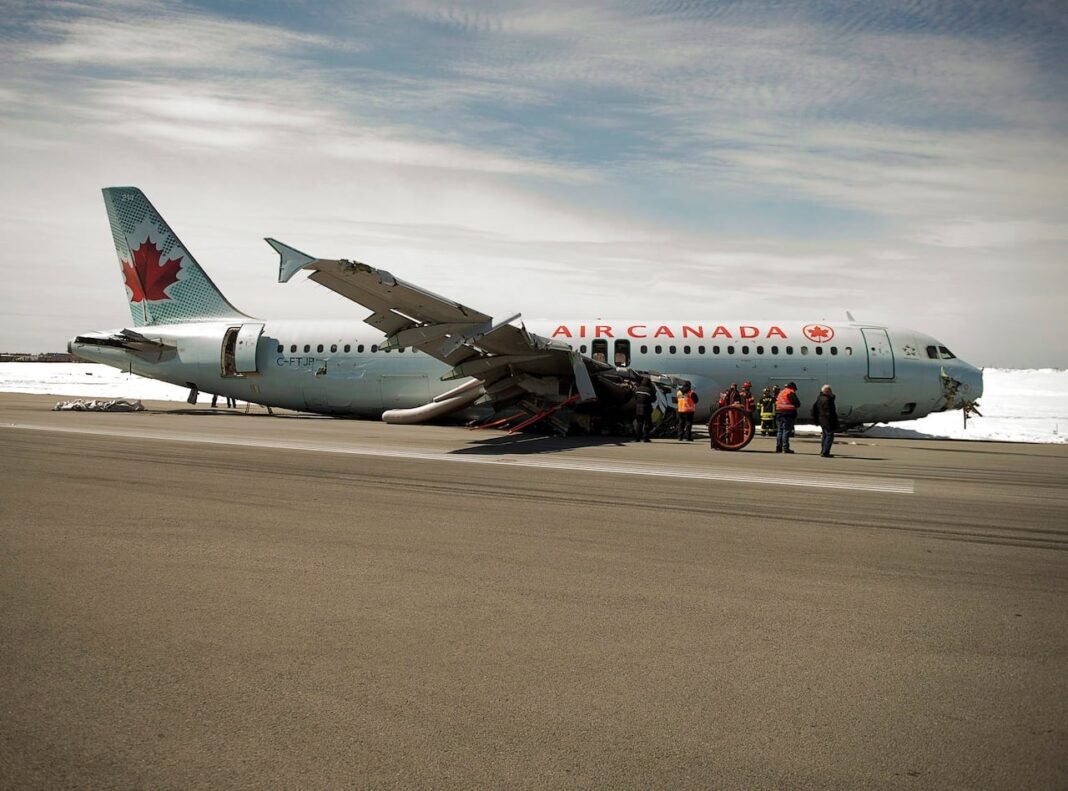
Proposed Settlement Nears for Air canada Flight 624 Crash Landing Lawsuit
A class-action lawsuit related to the 2015 crash landing of air Canada Flight 624 near Halifax is approaching a potential resolution. The proposed settlement aims to avoid extended litigation adn may provide affected passengers with more substantial compensation.
Settlement Terms and Upcoming Court Hearing
The legal action,initiated shortly after the March 2015 incident,was originally scheduled for trial earlier this year. Recently, a hearing has been set for June 22 in Nova Scotia’s Supreme court to consider approval of the settlement agreement. Under this proposal, Air Canada, Nav Canada, and Halifax international Airport Authority have agreed to pay a combined total of $18,075,000.This amount covers both claimant compensation and legal expenses.
Air Canada is expected to contribute over $15 million toward this sum.Legal counsel involved emphasize that finalizing the settlement would prevent drawn-out court battles and appeals while likely delivering higher payouts than prolonged litigation might achieve.
The Incident: Flight 624’s Challenging Approach Amid Severe Weather
On march 29, 2015, during intense snowstorm conditions at Halifax Stanfield International Airport, air Canada Flight 624 from Toronto faced critical difficulties on its final approach. The airbus A320 descended roughly 200 metres short of the runway after colliding with power lines. Of the aircraft’s 133 passengers onboard, twenty-five suffered injuries ranging from minor bruises to serious trauma.
An investigation by the Transportation Safety Board (TSB) released in 2017 identified multiple factors contributing to the accident: as visibility improved just below one kilometre-the minimum required for landing-the flight crew engaged autopilot relying solely on lateral guidance from a localizer beacon without altitude details. A strong headwind pushed the plane off course unnoticed due to procedural gaps that did not require cross-verifying altitude against distance during approach phases at that time.
The captain attempted corrective maneuvers by increasing engine thrust and pulling back on controls but could not avoid striking an approach light approximately 260 metres before touchdown. the aircraft then hit power lines causing airport outages before skidding along snowbanks and bouncing down part of the runway amid sparks and fuel leakage until coming safely to rest.
Legal Teams Collaborate Across Canadian Provinces
The plaintiffs are represented by law firms including Wagners based in halifax alongside MacGillivray Law from Nova Scotia and CFM Lawyers LLP located in Vancouver. these firms highlight their commitment to ensuring all class members receive timely notices so they can review case details or raise objections prior to court approval.
A Broader context: Aviation Safety Challenges Today
This development coincides with another recent aviation tragedy involving an Air Canada jet colliding with emergency vehicles at New York’s LaGuardia Airport-a crash resulting in pilot fatalities and multiple hospitalizations-highlighting persistent safety challenges within global airline operations.
Improvements Sparked by Flight 624 Incident
- Enhanced procedures: Following TSB recommendations after this event, airlines including Air Canada have revised standard operating procedures requiring flight crews to verify altitude alongside distance during low-visibility approaches rigorously.
- Advanced Technology: Modern avionics now incorporate complex terrain awareness warning systems (TAWS) designed specifically to alert pilots when deviations below safe glide paths occur-technology either unavailable or less developed during Flight 624’s timeline.
- Aviation Safety Trends: According to recent statistics from international aviation authorities, controlled flight into terrain (CFIT) accidents have declined by over 40% between 2015-2023 following stricter protocols; however ongoing vigilance remains essential given increasingly unpredictable weather patterns linked with climate change impacting flight safety worldwide.
“Resolving cases like these through settlements demonstrates progress toward justice for those affected while underscoring continuous efforts needed across industry stakeholders,” noted an aviation safety expert reviewing similar incidents globally.”
Navigating Forward: Accountability Coupled With Industry Progress
This case illustrates how complex interactions between human decision-making and technology can culminate in critical incidents but also how cooperative legal resolutions combined with regulatory reforms foster safer skies ahead-for current travelers as well as future generations who depend heavily on air transportation connectivity worldwide.