Kohl’s Faces Leadership Shifts Amid Mixed Financial Outcomes
Robust Earnings Offset by Declining Sales Figures
Following the announcement of its fiscal second-quarter results, Kohl’s stock experienced a notable increase exceeding 20%, driven by earnings and revenue that outperformed analyst predictions. Despite this positive momentum, the retailer continues to grapple with declining overall sales and an ongoing search for a permanent CEO.
The department store chain based in Wisconsin revised its full-year sales outlook, now forecasting a net sales decline between 5% and 6%, tightening from an earlier estimate of a 5% to 7% decrease. Concurrently, Kohl’s raised its adjusted earnings per share guidance to a range of $0.50 to $0.80,improving upon previous projections that spanned from an unadjusted $0.10 up to $0.60 per share.
Executive Turnover Creates Uncertainty
Kohl’s has undergone importent leadership changes recently. After Michelle Gass left in late 2022 for Levi Strauss & Co., Tom Kingsbury-formerly CEO at Burlington Stores-stepped in but resigned after two years at the helm. His successor Ashley Buchanan was dismissed within four months amid controversies involving vendor relationships linked to his personal connections. Currently, Michael Bender is serving as interim CEO while the company searches for new leadership.
Financial Strategy Adjustments Reflect Market Caution
In response to uncertain economic conditions, Kohl’s modified payment terms with select vendors-a common retail tactic aimed at extending payment periods and preserving cash flow during volatile times. The company described these adjustments as part of broader efforts toward operational efficiency but did not disclose further specifics.
Key Quarterly Metrics Reveal mixed Performance
- Earnings per share: Adjusted EPS reached $0.56 compared with analysts’ expectations of $0.29.
- Total revenue: Reported at $3.35 billion versus anticipated $3.32 billion.
- Net income: Rose significantly year-over-year from $66 million ($0.59/share) last year to $153 million ($1.35/share), excluding one-time expenses such as store closures and legal settlements.
- Comparable sales: Declined by 4.2%, indicating persistent challenges despite some recovery later in the quarter.
Simplified Inventory Management Supports Cost reduction
Kohl’s concluded the quarter holding inventory valued near $3 billion-a roughly five percent decrease compared with last year-helping lower carrying costs amid evolving consumer demand trends influenced by inflationary pressures and shifting shopping habits nationwide.
Evolving Shopper Behavior Influences Retail Approach
Bender emphasized that economic constraints on middle- and lower-income consumers are driving shifts toward more budget-kind brands or trading down within product categories across stores nationwide.
- The men’s apparel category along with children’s clothing experienced softer demand during spring months like May and June; though, July showed signs of stabilization aligning comparable sales closer to prior-year levels.
- Dresses, kids’ footwear, home décor items, plus value-focused exclusive brands outperformed other segments during this timeframe due largely to affordability appeal amid cautious spending patterns among shoppers affected by rising living costs nationwide.
Pursuit of Private Labels & Refined discount Strategies
Kohl’s continues balancing national brand offerings alongside proprietary merchandise crafted exclusively for their stores-including three newly introduced home goods collections-and plans expansion of its FLX activewear line into children’s apparel across hundreds of locations this fall.
These private-label products generally feature lower price points appealing strongly amid consumers prioritizing value over premium pricing.
Additionally, Kohl’s updated coupon policies now permit discounts on more brands than before aiming at increasing customer engagement through enhanced savings incentives across multiple product lines.
Diversifying In-Store Experience Through Sephora Partnership Growth
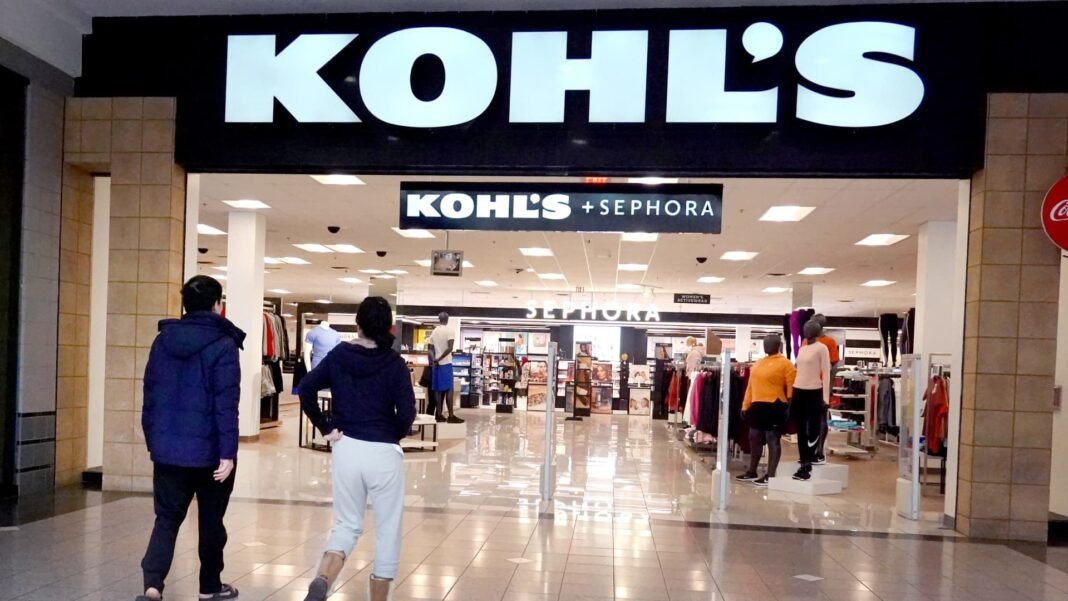
The full integration of Sephora shops inside all Kohl’s locations has successfully attracted younger shoppers while boosting overall foot traffic-the beauty sections have met management expectations since their rollout last spring season by drawing new customers into physical stores seeking experiential retail options beyond traditional department store offerings prevalent elsewhere in today’s market landscape.
Tackling Digital Expansion With New Executive Talent
This summer saw fresh appointments focused on accelerating digital growth: Arianne Parisi joined as chief digital officer after spearheading JD Sports’ online initiatives; Steven Dee became chief technology officer bringing expertise from nike and J.Crew among others.
Their mission includes revitalizing e-commerce channels were online sales outpaced brick-and-mortar performance during Q2 partly fueled by expanded coupon eligibility available digitally.
“Our future success hinges on regaining traction through strategic initiatives designed to reconnect with customers who have drifted away,” stated interim CEO Michael Bender during the earnings call.”
Navigating Forward: Rebuilding Momentum Amid Industry Challenges
Kohl’s stands at a pivotal crossroads where stabilizing executive leadership combined with refined merchandising strategies will be crucial for reversing multi-year declines in annual revenue-which has fallen consecutively over three years-and restoring investor confidence reflected in market capitalization dropping sharply from nearly $7 billion at end-2021 down close to approximately $1.5 billion today.
The retailer remains committed toward sustainable long-term growth driven by improved inventory control, a stronger emphasis on exclusive brands, a reimagined discount framework, and enhanced omnichannel capabilities supported by newly appointed e-commerce leaders prepared for evolving consumer demands amidst competitive retail landscapes.