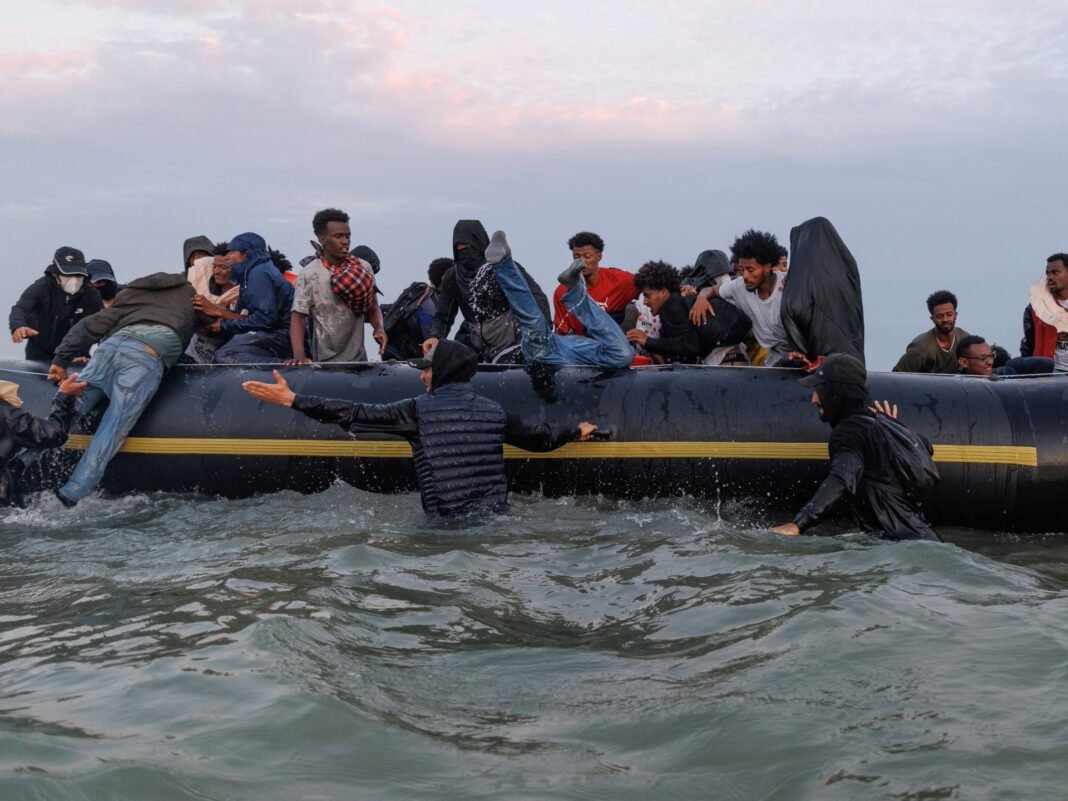
UK High Court Ruling Sheds Light on Complexities of New Migration Strategy
A 25-year-old asylum seeker from Eritrea faces deportation to France after the UK High Court rejected his appeal to postpone removal under the recently implemented “one in, one out” migration pilot program between Britain and France.
Case Overview and Judicial Developments
the individual fled Eritrea in 2019 to avoid mandatory military conscription. Upon arriving in France, he spent several weeks living in a temporary camp near Calais before crossing the English channel by boat into the UK during August. His identity remains protected due to legal confidentiality rules.
Initially,London’s High Court granted him a temporary injunction preventing deportation while his trafficking claims were examined. However, this ruling was later reversed following further judicial scrutiny. The Home Office contested his allegations, citing inconsistencies that cast doubt on his credibility.
judge Clive Sheldon concluded there was insufficient evidence warranting a full trial and highlighted contradictions that weakened the asylum seeker’s trafficking account. As a result,plans were made for his early morning return flight to France.
The Mechanics of the “One In, one Out” Migration Initiative
The UK government has begun enforcing its bilateral agreement with France designed to regulate irregular migration across the Channel. This policy stipulates that individuals who enter Britain unlawfully are returned to France while an equivalent number of verified asylum seekers with family ties are admitted into the UK.
This week saw another milestone when an individual from India who arrived via small boat was deported on a commercial flight-the first such removal since launching this scheme.Prime Minister Keir Starmer hailed it as proof of operational feasibility and outlined ambitions for substantially increasing these returns over time.
Striving for Equitable Migration management
The government defends this approach as balanced-aiming both to reduce unauthorized entries and uphold humanitarian responsibilities through resettlement programs focused on family reunification within Britain.
Opposition from Advocacy Groups
A wide range of civil society organizations have criticized what they view as severe policies targeting vulnerable refugees seeking safety. Opponents argue these measures serve political agendas catering to far-right pressures rather than addressing underlying causes with compassion or practical solutions.
“This punitive strategy unfairly targets those escaping persecution,” stated Griff Ferris from an immigrant support group. “It risks deepening societal divides instead of promoting integration.”
Escalating Anti-Immigrant Sentiment Amid Policy Shifts
The intensified focus on stopping small boat crossings coincides with rising hostility toward immigrants within segments of British society. Recent far-right demonstrations drew crowds estimated at 150,000 marching through central London-events marred by violent confrontations causing serious injuries among police officers and damage involving mounted units.
Migratory Patterns and Humanitarian impact
- Tens of thousands continue attempting risky sea crossings annually despite stricter border enforcement;
- This year alone has recorded at least 23 deaths during Channel crossings according to French authorities;
- The ongoing crisis highlights governments’ tough balancing act between security imperatives and human rights commitments.
Navigating Future Challenges in UK-France Migration Cooperation
This case illustrates inherent tensions within emerging immigration frameworks striving simultaneously for deterrence and controlled admission amid fluctuating public opinion. The “one in, one out” policy is an evolving experiment whose long-term success remains uncertain but signals heightened cross-border collaboration efforts against irregular migration flows.