Grasping the Monumental Scale of Malware Data Archives
Exploring the Immensity of Malware Collections
The cybersecurity community is home to some truly massive malware repositories. As a notable example, vx-underground boasts one of the largest archives of malware source code, currently storing close to 30 terabytes of data. To contextualize this volume, a single terabyte equals one trillion bytes-enough space to hold thousands of full-length 4K movies.
On an even grander scale, VirusTotal-a prominent platform that aggregates user-submitted malware samples and scans them with numerous antivirus engines-has accumulated an astounding 31 petabytes of malicious files. As one petabyte corresponds to roughly 1,000 terabytes, VirusTotal’s archive eclipses vx-underground’s collection by more then a thousandfold.
The Critical role These Vast Datasets Play in Cybersecurity
Such enormous troves are indispensable for cybersecurity experts and AI engineers alike. They provide essential training material for machine learning algorithms designed to identify malicious software patterns and enable analysts to monitor how cyber threats mutate over time. The sheer magnitude enhances detection accuracy and accelerates responses against novel attack vectors.
A Concrete analogy: Visualizing Data as Physical Stacks
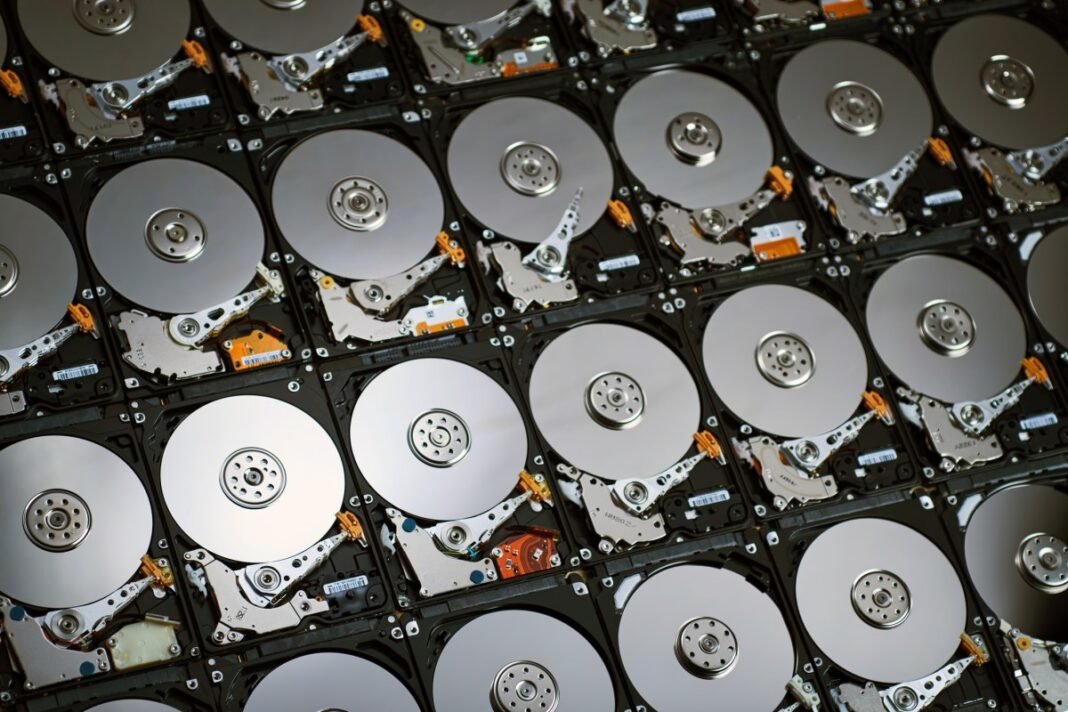
To better appreciate these colossal amounts, imagine representing all this data using standard desktop hard drives. A typical consumer-grade 3.5-inch hard drive stands about one inch tall and usually offers around 1 terabyte of storage capacity (actual usable space may vary).
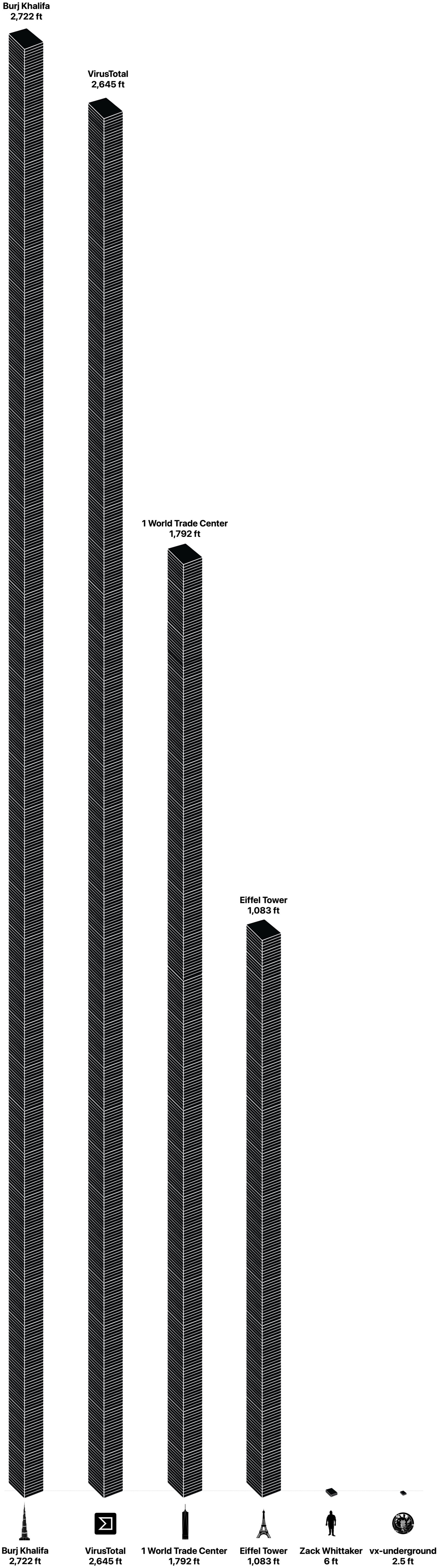
- vx-underground’s Archive: Thirty such drives stacked would form a tower approximately two-and-a-half feet high (30 inches).
- VirusTotal’s Collection: With its immense size equating to roughly 31,000 individual drives stacked vertically,the pile would reach nearly half a mile tall-about 2,645 feet.
Towering Over Iconic Landmarks: Putting data Size into Outlook
This hypothetical stack approaches the height of Dubai’s Burj Khalifa-the tallest building on Earth at approximately 2,722 feet-falling just short by less than a hundred feet. For further comparison:
- the Statue of Liberty measures about 305 feet tall; VirusTotal’s dataset stack would be almost nine times taller.
- An average adult standing six feet tall would appear minuscule next to even vx-underground’s comparatively modest tower.
The Escalating Challenge Facing Cyber Defenses Today
The rapid expansion in collected malware samples reflects both progress in threat identification techniques and mounting difficulties confronting cybersecurity teams globally. As attackers refine their strategies-from sophisticated ransomware assaults targeting healthcare systems to complex supply chain infiltrations-the demand for comprehensive datasets grows ever more urgent for developing resilient AI-driven defenses.
A Contemporary Example: The Surge in Ransomware Incidents
Citing recent global trends reveals ransomware attacks surged by over 150% year-over-year across critical infrastructure sectors during early 2024 alone-with fresh variants appearing daily worldwide-highlighting why maintaining exhaustive archives like those curated by vx-underground and VirusTotal is vital for timely threat mitigation.
This vast scale also explains why organizations increasingly rely on scalable cloud storage paired with distributed computing frameworks that facilitate swift analysis-a necessity when managing petabytes upon petabytes worth of continuously evolving cyber threats.
Merging Scale with Strategic Cybersecurity Insights
this visualization exercise transforms abstract figures into tangible dimensions rivaling some human engineering marvels-underscoring how expansive today’s digital battleground has become. For security researchers utilizing these extensive repositories daily, success hinges not only on amassing large quantities but converting this mountain-sized cache into actionable intelligence capable of safeguarding millions from cyber harm worldwide.