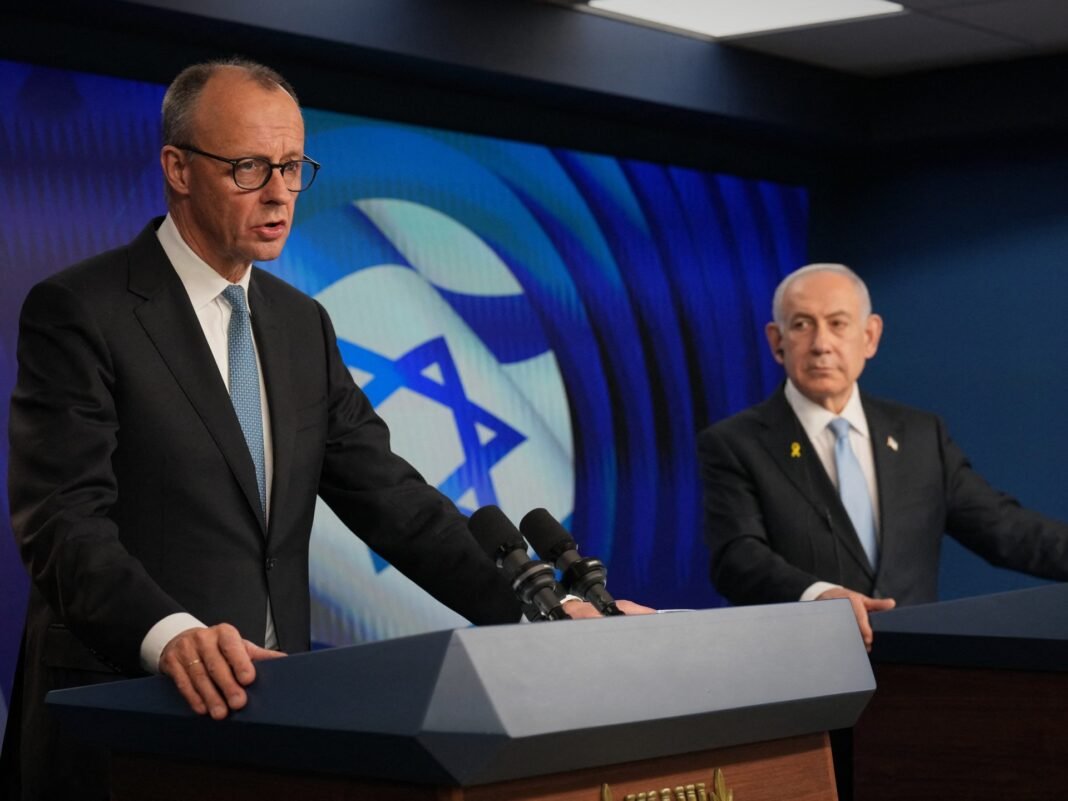
German Chancellor’s Visit Reveals Divergent Stances on Palestinian Statehood
On his inaugural official visit to Israel, German Chancellor Friedrich Merz voiced support for the creation of a Palestinian state, a position firmly rejected by Israeli Prime Minister benjamin Netanyahu. Their discussions in Jerusalem highlighted sharply contrasting views regarding the future of Gaza and the occupied West Bank.
Conflicting Visions for Peace in the Middle east
During a joint press conference, Merz outlined Germany’s aspiration for a Middle East where Israel coexists peacefully alongside an independent Palestinian state. He argued that such recognition represents the most viable route toward enduring peace. However, he clarified that Germany does not plan to formally recognize Palestine “in the foreseeable future,” emphasizing that official recognition should follow successful peace negotiations.
This approach differs from several European nations-including France, Spain, and the United Kingdom-that have already granted formal recognition to Palestine. In contrast, Netanyahu reiterated Israel’s firm opposition to any two-state solution at this time. He cautioned that establishing a Palestinian state could jeopardize Israel’s security and mentioned ongoing deliberations about annexing parts of the West bank-an idea previously dismissed by both Germany and former U.S. administrations.
The Strain on German-Israeli Relations Amid Conflict
The recent escalation in Gaza has tested what has historically been one of Europe’s closest alliances with Israel. Rooted in post-Holocaust commitments, Germany has long stood as one of Israel’s most steadfast supporters. Yet Berlin temporarily suspended arms exports destined for use in Gaza following intensified hostilities-a rare public expression of concern from Chancellor Merz over civilian casualties during military operations.
This embargo lasted onyl weeks before being lifted amid strong Israeli objections led personally by Netanyahu. Despite these tensions, Merz reassured that Germany remains fundamentally committed to ensuring Israeli security through continued military cooperation.
Germany as a Key Arms partner Amid Political Disputes
Ranking second only to the United States as an arms supplier to Israel, Germany recently signed its largest-ever defense contract: a $4.5 billion agreement providing advanced missile defense technology known as Iron Dome 2. This landmark deal underscores deepening military ties between both countries despite political disagreements surrounding Gaza’s conflict.
No immediate Plans for Reciprocal Diplomatic Visits
Differing from predecessors who visited early into their terms-Angela Merkel after two months and Olaf Scholz after three-Merz arrived seven months into office without securing plans for Netanyahu to reciprocate with an official visit to Berlin anytime soon.
This hesitation is partly due to legal complications facing Netanyahu; he is subject to an International Criminal Court arrest warrant related to alleged war crimes during operations in Gaza-a factor complicating diplomatic exchanges given Germany’s obligations as an ICC member state under international law.
Cautious Approach Toward Future Engagements
When asked about inviting Netanyahu back to Germany during their meeting, Merz responded carefully: no invitations have been extended yet due primarily to current circumstances but left open possibilities if conditions evolve favorably later on.
acknowledging Historical Responsibility While Prioritizing Security
Before meeting senior Israeli officials including President Isaac Herzog and foreign Minister Gideon Saar-who greeted him warmly upon arrival at Tel Aviv airport-Merz paid respects at Yad Vashem Holocaust Memorial where he reaffirmed Berlin’s enduring commitment stemming from historical responsibility toward Jewish communities worldwide.
“Germany must remain unwavering in protecting both the existence and security of Israel,” stated Merz amid heightened regional tensions triggered by recent conflicts.”
Civil Society Responses Within Germany
The chancellor’s visit sparked protests across Berlin demanding an end to arms exports bound for Israel while condemning what demonstrators described as genocidal actions against Palestinians in Gaza. Opposition parties criticized Merz’s decision engaging directly with Netanyahu given his ICC indictment status-a move viewed by some as undermining international justice efforts while complicating German foreign policy coherence.
Navigating Between Political Realities and Public Sentiment
This situation exemplifies broader challenges governments face when balancing strategic alliances against ethical concerns amid complex geopolitical crises involving human rights issues versus national security priorities.
An Enduring Yet Tested Partnership
An analysis emerging from Ramallah highlights how despite strains caused by recent events-including accusations directed at Berlin over perceived complicity through military support-the relationship between Germany and Israel remains fundamentally strong. The resumption of weapons sales combined with historic defense contracts signals ongoing mutual reliance even when political rhetoric intensifies or critical voices arise domestically or internationally.
“Israel acknowledges criticism coming from its closest European ally but largely regards it as symbolic rather than indicative of substantive policy changes,” observed experts familiar with bilateral relations.”
- Divergent policies: Some EU nations have recognized Palestine ahead of negotiations,
while Germany insists formal recognition must result only after conclusive peace agreements; - tense diplomacy: Legal challenges surrounding Netanyahu hinder reciprocal visits despite longstanding ties;
- moral imperatives: Historical guilt continues shaping German foreign policy focused on Jewish safety;
- Civic activism: Protests reflect growing domestic unease over arms sales linked directly or indirectly with conflict zones;
- Evolving cooperation:$4.5 billion missile defense contract highlights deepening strategic partnership amidst political friction;
- sovereignty dilemmas:Nations wrestle balancing alliance commitments against accountability demands under international law.
;
;
.