Major Leadership Transitions and Strategic Realignments at Tesla
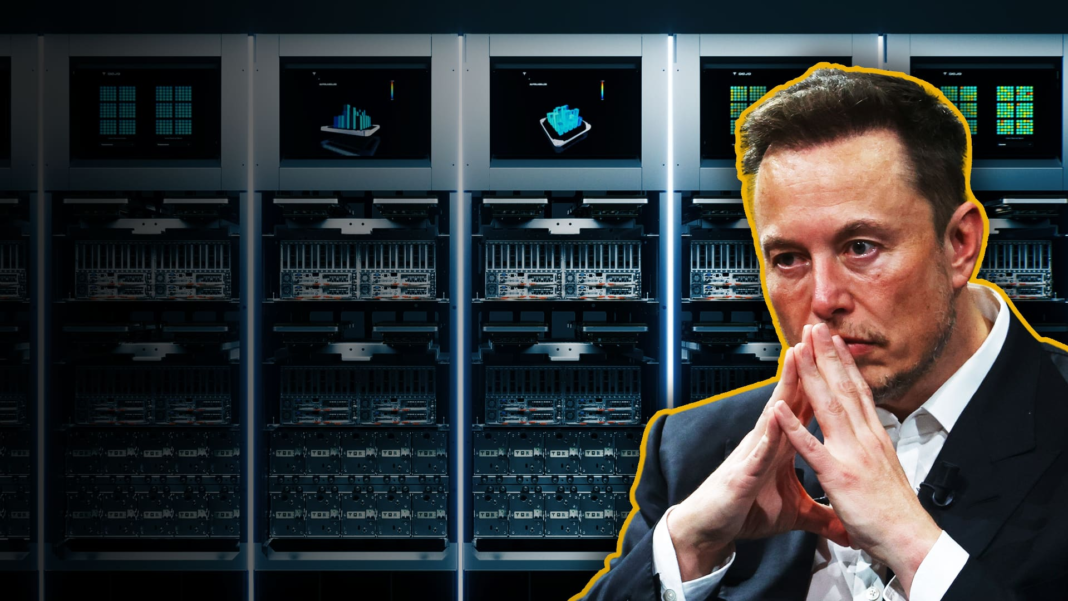
Tesla is currently navigating a period of profound change as Pete Bannon, the vice president overseeing hardware design engineering, prepares to depart. Since joining Tesla in 2016 after a significant stint at Apple, Bannon has been instrumental in leading the progress of Tesla’s Dojo supercomputer initiative and reported directly to Elon Musk.
Shifting focus on AI: The Changing Role of dojo
The Dojo supercomputer was originally conceived as a critical asset for advancing Tesla’s artificial intelligence capabilities. Its primary function was to handle enormous volumes of video data from Tesla vehicles,accelerating AI training for autonomous driving systems. However, recent internal restructuring has resulted in the dissolution of the dedicated Dojo team, with engineers being reassigned across various other projects within the company.
This strategic pivot signals a departure from Tesla’s earlier ambition to position itself not only as an electric vehicle innovator but also as a frontrunner in AI and robotics technology development.
Obstacles in Scaling Advanced AI Infrastructure
During recent financial disclosures, Elon Musk expressed optimism that an enhanced version of Dojo could achieve operational scale by next year-targeting computational power comparable to roughly 100,000 Nvidia H-100 GPUs. Despite this hopeful outlook, evolving priorities suggest potential delays or modifications may affect this timeline.
In parallel with these developments, Tesla secured a $16.5 billion agreement with Samsung Electronics aimed at domestic production of its proprietary A16 chips. This move is designed to strengthen internal computing capabilities while reducing dependence on external suppliers amid global semiconductor supply chain challenges.
Progress and Challenges in Robotaxi Deployment
Tesla continues its real-world testing of Robotaxi services primarily based in Austin, texas. Here vehicles operate under human supervision with safety drivers ready to intervene if necessary. Meanwhile, San Francisco hosts another pilot where rides are provided by human drivers but can be requested through an app labeled “Tesla Robotaxi.” These initiatives represent incremental progress toward fully autonomous ride-hailing solutions despite ongoing technological hurdles and regulatory scrutiny.
Delineating xAI from Tesla’s Core AI Projects
Musk clarified distinctions between his ventures-Tesla and xAI-in terms of their artificial intelligence goals amid concerns about competition for top talent. xAI focuses on developing large-scale models targeting artificial general intelligence (AGI), working with terabyte-level datasets intended for broad cognitive tasks. Conversely,Tesla concentrates on smaller-scale models optimized specifically for practical applications such as self-driving cars and robotics systems.
This clear division explains why some engineers passionate about AGI research have gravitated toward xAI rather than joining Tesla’s applied AI teams focused on immediate product integration.
Leadership Turnover Reflects Broader Organizational Shifts
the past twelve months have witnessed several notable exits among senior leaders at Tesla including Milan kovac (head of Optimus robotics engineering), David Lau (vice president of software engineering), and Omead Afshar (former chief of staff). Such departures highlight challenges faced by rapidly expanding tech companies striving to balance innovation demands alongside maintaining organizational cohesion during periods of intense growth.
“Tesla’s evolving habitat highlights both unusual opportunities and intricate internal dynamics shaping one of today’s most closely observed technology enterprises.”