U.S. Rare Earth Stocks Surge Amid ChinaS Export Postponement
Investor Response to Shifts in Trade Policy
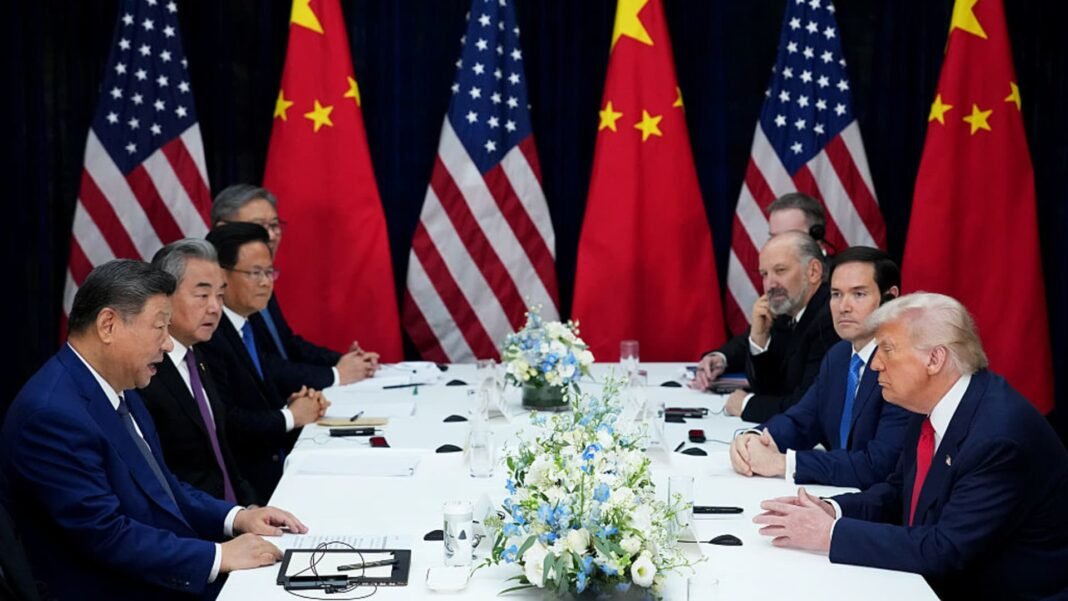
Following China’s announcement to defer further export restrictions on rare earth elements, shares of U.S.-based rare earth mining companies experienced a notable upswing. This growth came after a high-profile summit between President Donald Trump and Chinese President Xi Jinping in South Korea,where both leaders reached an understanding on trade matters.
In early market activity, Critical metals surged close to 7%, while USA Rare Earth climbed about 6%. Othre significant gains were seen in Energy Fuels, which rose by roughly 3%, alongside similar increases for MP Materials and NioCorp Developments.
A New Chapter in U.S.-China Cooperation Over Rare Earths
The longstanding dispute over rare earth minerals appeared to ease as President Trump described his dialog wiht Xi as “remarkable,” affirming that the “rare earth issue has been resolved.” The agreement also included Washington scaling back tariffs related to fentanyl imports from China, signaling broader efforts toward de-escalation between the two economic powers.
This diplomatic breakthrough prompted Beijing to delay its planned enforcement of stricter export controls on these critical materials by one year. Speaking aboard Air Force One, Trump expressed hope that this postponement could become a recurring arrangement, hinting at potential ongoing collaboration.
The Critical Role of Rare Earth Elements in Modern Technology
The group of seventeen chemical elements known as rare earths possess distinctive magnetic and electronic characteristics vital for numerous advanced applications.
Their use spans industries such as electric vehicle production, cutting-edge robotics, renewable energy systems like solar panels and wind turbines, as well as defense technologies including missile guidance and radar equipment.
A Dominant Global Supplier: China’s Control Over the Market
China accounts for approximately 70% of worldwide rare earth extraction and processes nearly 90% of these materials globally.
This dominance extends beyond mining; China imports raw ores from other nations for refining before exporting finished products. Such control has raised strategic concerns among U.S. officials who view reliance on Chinese supply chains as a vulnerability amid accelerating transitions toward clean energy technologies dependent on these minerals.
Tensions Persist Despite Temporary Export Freeze
the initial export restrictions announced earlier this year remain partially active despite the recent delay in implementing tighter measures. In April alone,Beijing imposed counter-tariffs targeting key American sectors amid escalating trade frictions with Washington.
An October declaration warned against what China termed “improper use” of rare earth resources-notably regarding military applications-fueling global apprehension about supply chain security within sensitive technology domains.
Evolving Industry Responses Reflect Geopolitical Risks
- A prominent electric vehicle manufacturer recently revealed plans to diversify its sourcing away from Chinese suppliers due to geopolitical uncertainties surrounding rare earth availability;
- A leading robotics company accelerated investments into domestic processing plants after experiencing price fluctuations linked directly to trade policy announcements;
- An innovative battery startup secured capital aimed at developing alternatives that minimize dependence on traditional rare earth elements;
- This dynamic illustrates how international diplomacy shapes innovation paths across sectors reliant on critical metals essential for future technologies.
Navigating Future Challenges: Cooperation Versus Competition in Critical Mineral Supply Chains
This recent accord represents an initial move toward stabilizing a historically contentious aspect of U.S.-China relations but does not fully resolve strategic concerns over resource access control. With global demand for sustainable energy solutions expected to grow more than 30% annually through 2030 according to industry forecasts, pressure mounts worldwide for diversified sourcing strategies beyond dominant suppliers like China.
“Securing reliable access to critical minerals such as rare earths transcends economics-it is now integral to national security.”
This evolving landscape underscores why governments and corporations are investing heavily not only in choice mining projects outside China but also advancing recycling technologies designed to recover valuable elements from existing products-a trend poised for rapid expansion moving forward.